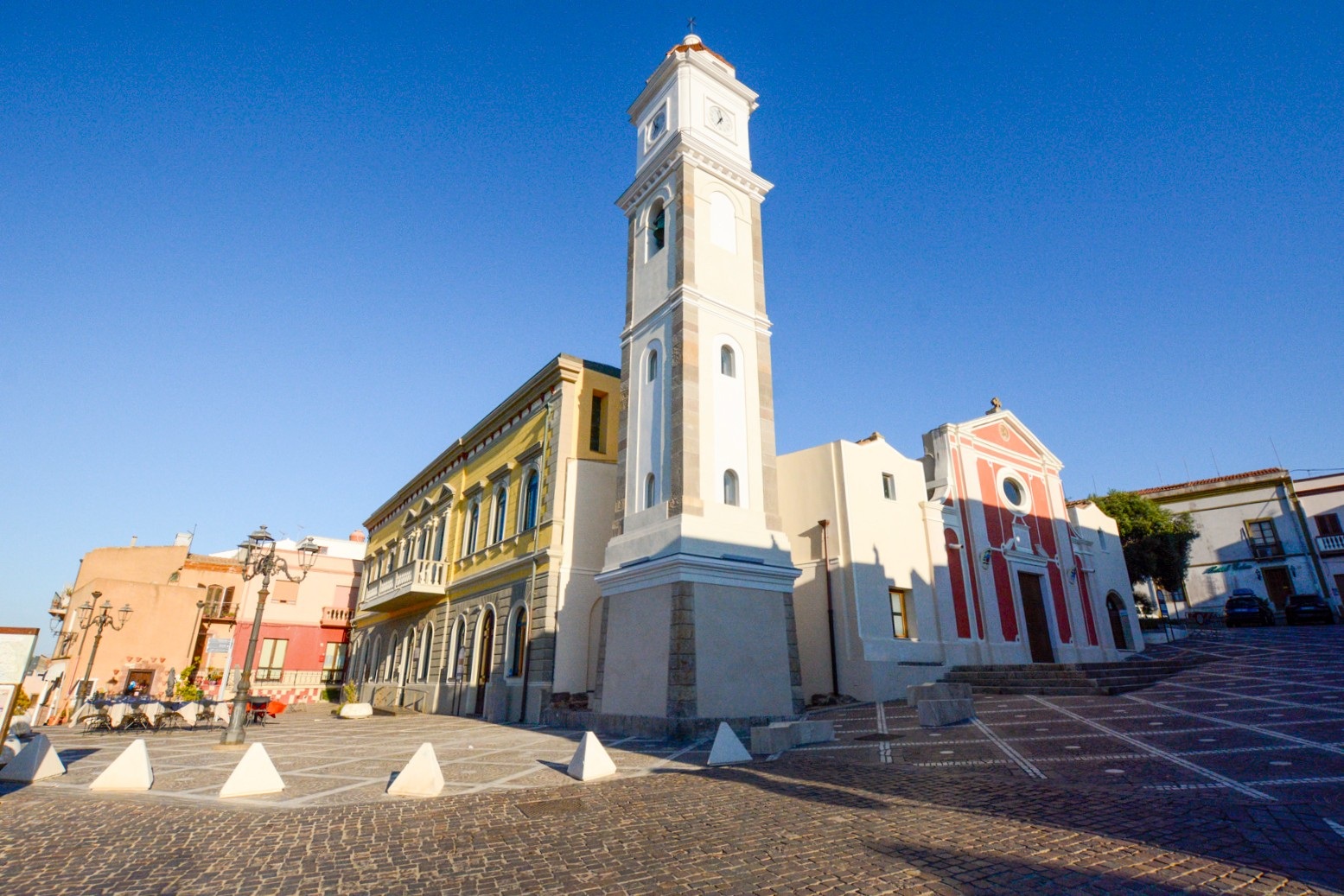


San Pietro and Sant’Antioco

Sant’Antioco and San Pietro: lands that embody and reflect a Sardinia whose rugged, untamed character is its beauty, and whose ancient, multicultural soul is its wealth.
Born of a volcano, Sant’Antioco is Italy’s fourth largest island, as precious as the metals hidden in its depths. It has long been a haven that throughout history seduced entire peoples: the Phoenicians, who founded here the ancient city of Sulki—giving its name to the whole Sulcis area; the Romans, who called it Insula Plumbaria; and the Ligurians, who brought to these two islands the tabarchino dialect. A refuge where the past is still alive today through traditions such as the spinning and weaving of sea silk (byssus), making this the only place in the world where this ancient art is still practiced.
San Pietro—San Pé in tabarchino—is Italy’s sixth largest island, and if there is a place in Sardinia where one truly feels embraced by a natural oasis, this is it. The Carthaginians knew it, calling San Pietro the “Island of Hawks.” The Eleonora’s falcon knows it too, migrating here from Madagascar to enjoy the mild Mediterranean climate; as do the countless flamingos that paint the lagoons pink, and even the beetle—of which a unique species exists only here.
And as in every true sea oasis, one cannot miss historic tuna fisheries and steep cliffs rising up to 150 meters, crowned by the 19th-century Capo Sandalo lighthouse—the westernmost in Italy—overlooking seabeds that are a diver’s paradise.