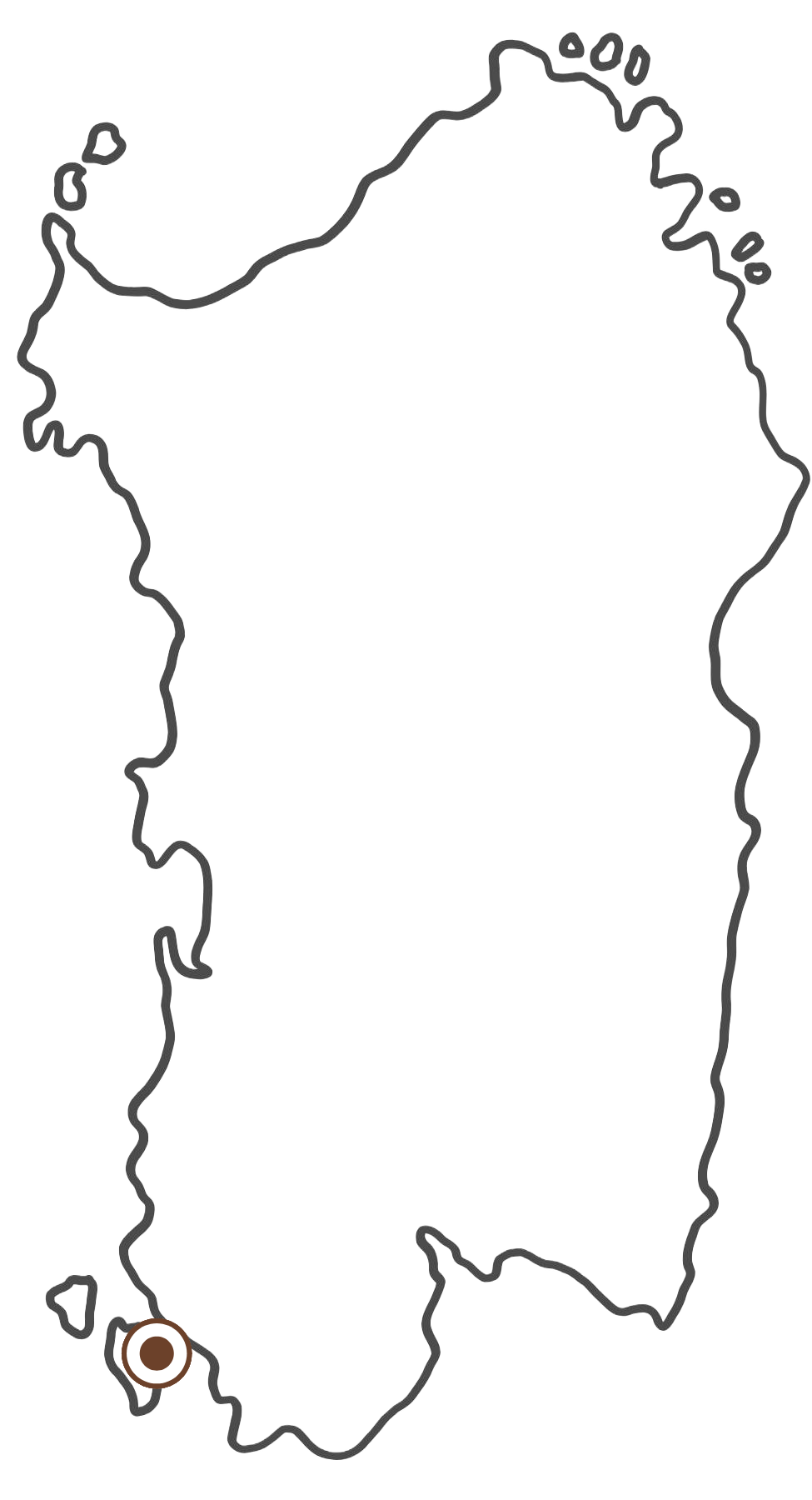


On the western slopes of the Forte Su Pisu hill, on the island of Sant'Antioco, develops the evocative village of Is Gruttas, a one-of-a-kind subterranean settlement that bears witness to an extraordinary stratification of histories and eras.
The site originates from the vast Punic necropolis of the ancient city of Sulky, whose tombs were excavated in the tuff by the Carthaginians between the 6th and 3rd centuries BC.
In subsequent centuries, particularly to escape the continuous and threatening incursions of Barbary pirates that plagued the coasts, local shepherds and farmers found refuge inside these burial chambers hidden from the eyes of invaders. What initially must have been provisional shelters gradually transformed into permanent dwellings, giving life to a true rock-hewn district known as Is Gruttas (the caves) and inhabited by its residents, called Is Gruttaiusu, until the 1970s.
These subterranean environments, capable of guaranteeing a naturally temperate climate in every season, were modified and adapted to the needs of daily life. Inside the ancient tombs, fireplaces, ovens, masonry beds, and light openings were carved out, furnished with simple household items and modest objects of peasant tradition. Today, thanks to a careful restoration project initiated in the mid-1990s, the village is part of the Historical Archaeological Park of Sant'Antioco and allows visitors to take an emotional journey through the memories of popular domestic life and the vestiges of antiquity.