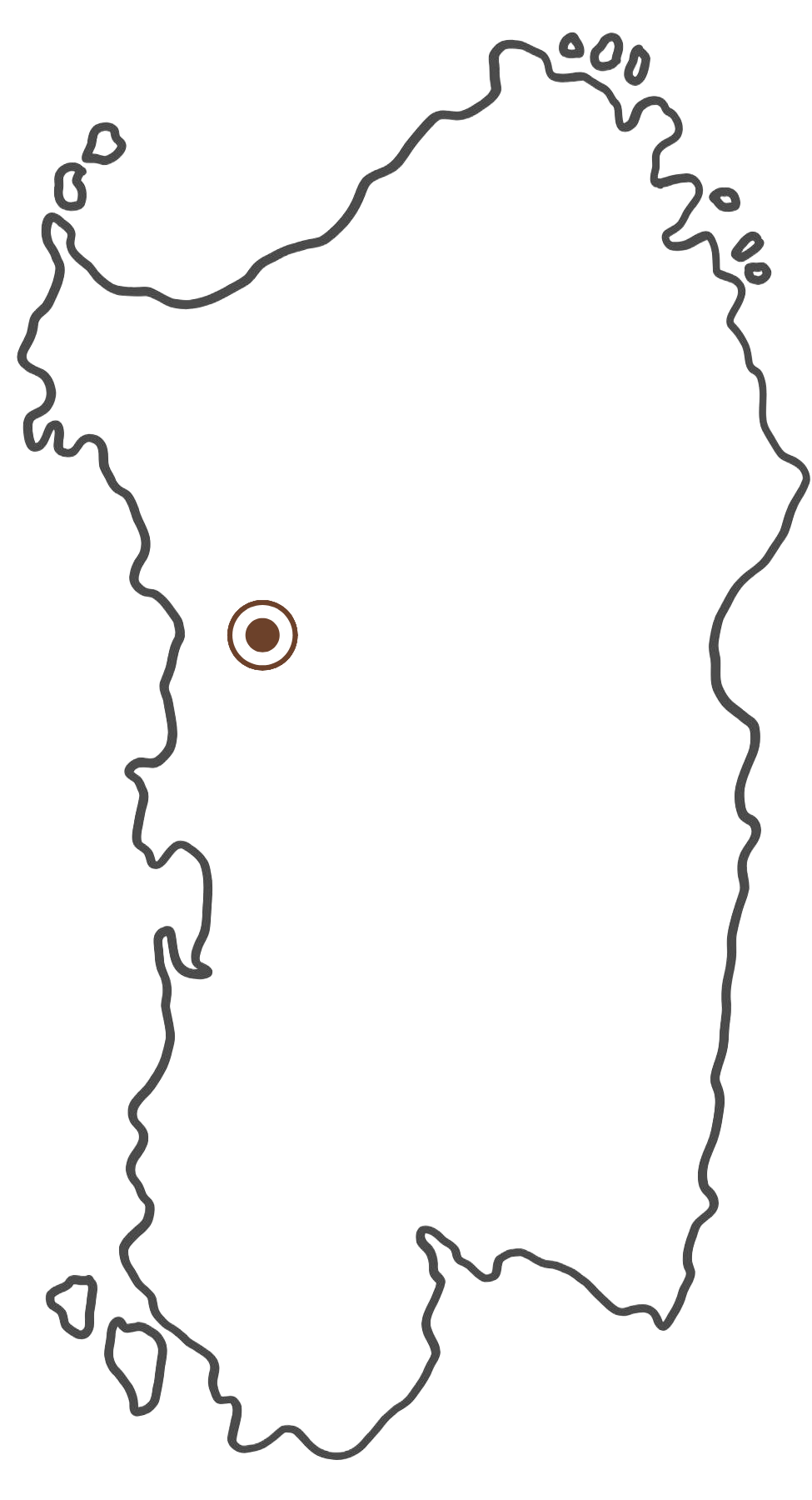


Tamuli does not welcome the visitor with the usual monumental scenery, but disorients them by staging a silent and powerful dialogue between worked stone and the land of the Marghine.
In Macomer, this wind-swept plateau preserves a complex where everyday life and the obsession with the afterlife shared the exact same few meters of pasture.
The most striking visual impact is provided by the six basalt betyls aligned along the giants' tomb. These are not simple boundary stones, but true petrified presences: three smooth conical shapes and three marked with breast-like bosses, almost as if to sculpt the balance between the masculine and feminine principle guarding the deceased. Around them, the wide semicircular exedra and the long burial corridor showcase an interlocking of dark boulders that seems born directly from the outcropping rock.
A short distance away, the remains of the nuraghe and the circular perimeters of the village bring the narrative back to an earthly dimension, made of domestic life, labor, and shelter. At Tamuli, stone ceases to be a pure construction material and becomes language: a mineral code that has crossed the millennia to recount how an ancient people inhabited, prayed, and measured their own time.