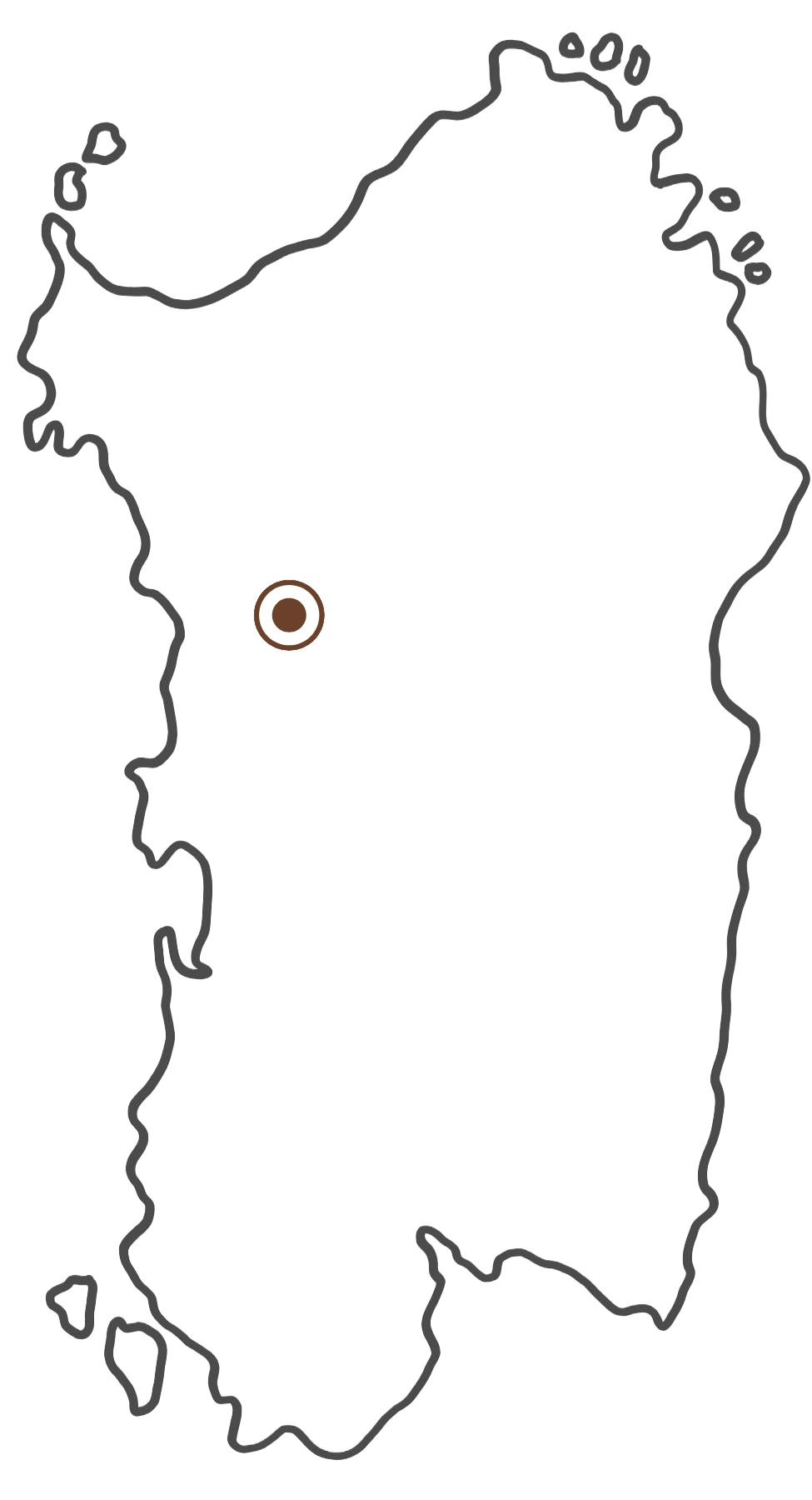


One finds oneself at Filigosa almost by surprise, immersed in the plain of Macomer, where volcanic stone emerges from the ground marked by sharp, deep cuts. The impact with these dark mouths carved into the rock bench evokes a sense of immediate reverence, transmitting the perception of standing on the threshold of a space reserved for the sacred.
The necropolis consists of four hypogeic tombs carved into the volcanic rock, known as domus de janas, which gave their name to the famous Filigosa culture. The most characteristic architectural element is represented by the long uncovered access corridors, called dromos, cut into the rock bench up to six meters in length. Through the entrance gap, one accesses antichenambers and burial chambers with a circular or polygonal plan, enriched by sculpted elements such as framed doorways, steps, and pillars that imitate the living spaces of the living. Ceramic finds and burial layers attest to a prolonged reuse of the rooms during the Copper and Bronze Ages.
Observing the intertwining between the worked rock and the landscape allows one to feel the spiritual legacy of a community that knew how to transform raw stone into an eternal dwelling. The place offers the tangible and evocative memory of an indissoluble bond with the ancient cult of ancestors.