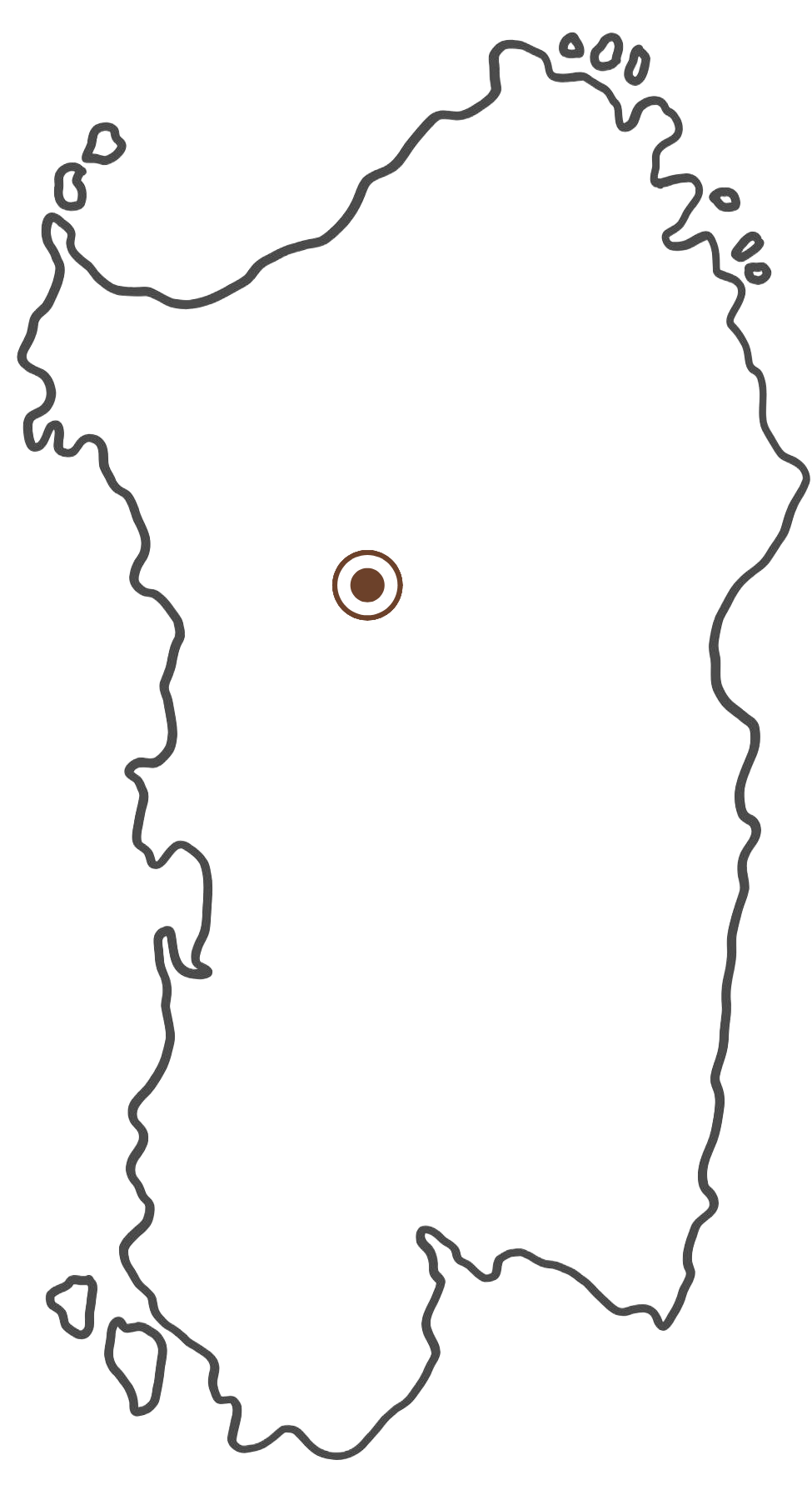


Silence of basalt and broom wraps the basin of Silanus, where the Santa Sabina nuraghe and the Christian sanctuary of the same name share the very same fragment of land.
The prehistoric tower emerges from the volcanic stone as a severe block, closed around a tholos that holds the echo of ancient communal practices and gestures now lost in the wind. Just a few meters away, the small countryside church raises its whitewashed walls, creating a sharp chromatic counterpoint between the black of the ancient lava and the lime of medieval devotion that still gathers the community today during festivals.
No fence separates the two buildings, allowing the grassy courtyard to become a direct meeting ground between remote eras. The shepherds and pilgrims who once climbed this plateau left material traces that now resurface among the roots of the mastic trees and the packed earth of the plateau, bearing witness to an uninterrupted use of these sacred sites. Walking these paths allows one to perceive a spiritual continuity that spans the centuries.
The experience of the visit changes radically compared to other island sites. Here, one does not merely observe a protohistoric ruin, but crosses a living threshold where the stone of the Nuraghes and the bell of the patronal feast continue to share the exact same breath of wind and history.