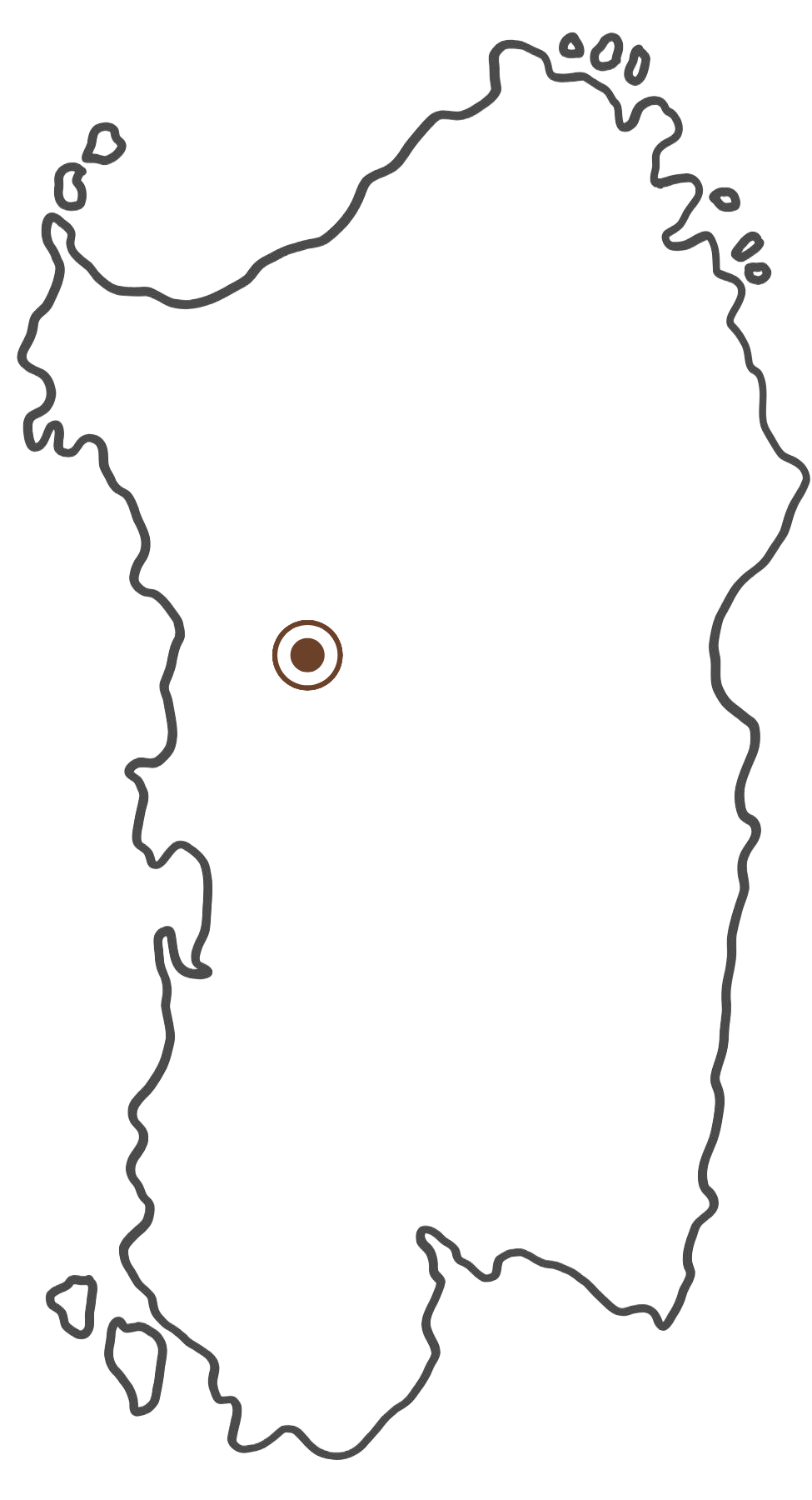


A sense of spontaneous wonder overcomes anyone whose gaze caresses the area of Cubas, where the stone preserves the memory of an ancient spirituality. The sight of this space immersed in the countryside of Silanus evokes an immediate emotion, capable of recalling the strength and devotion of a community tied to its sacred symbols.
The site includes a single-tower nuraghe, a village, and a funerary area made famous by the presence of its renowned dark basalt betyls. These monolithic sculptures, conical in shape and worked with bosses or mammalian bumps, represented protective deities and the continuity between life and the cult of the dead. The main tower displays masonry made of large squared blocks arranged in horizontal courses. The entrance leads into a corridor with a niche and a staircase for the upper floor, guiding to the central chamber covered by a false dome. All around emerge the remains of the village huts and the masonry facings of the giants' tombs.
Standing before the betyls and the ruins of Cubas means listening to the tale of an entire civilization, where the sculpted stone evokes a visceral bond between man and the sacred. The place leaves the clear memory of a millennial history etched forever into the basalt.