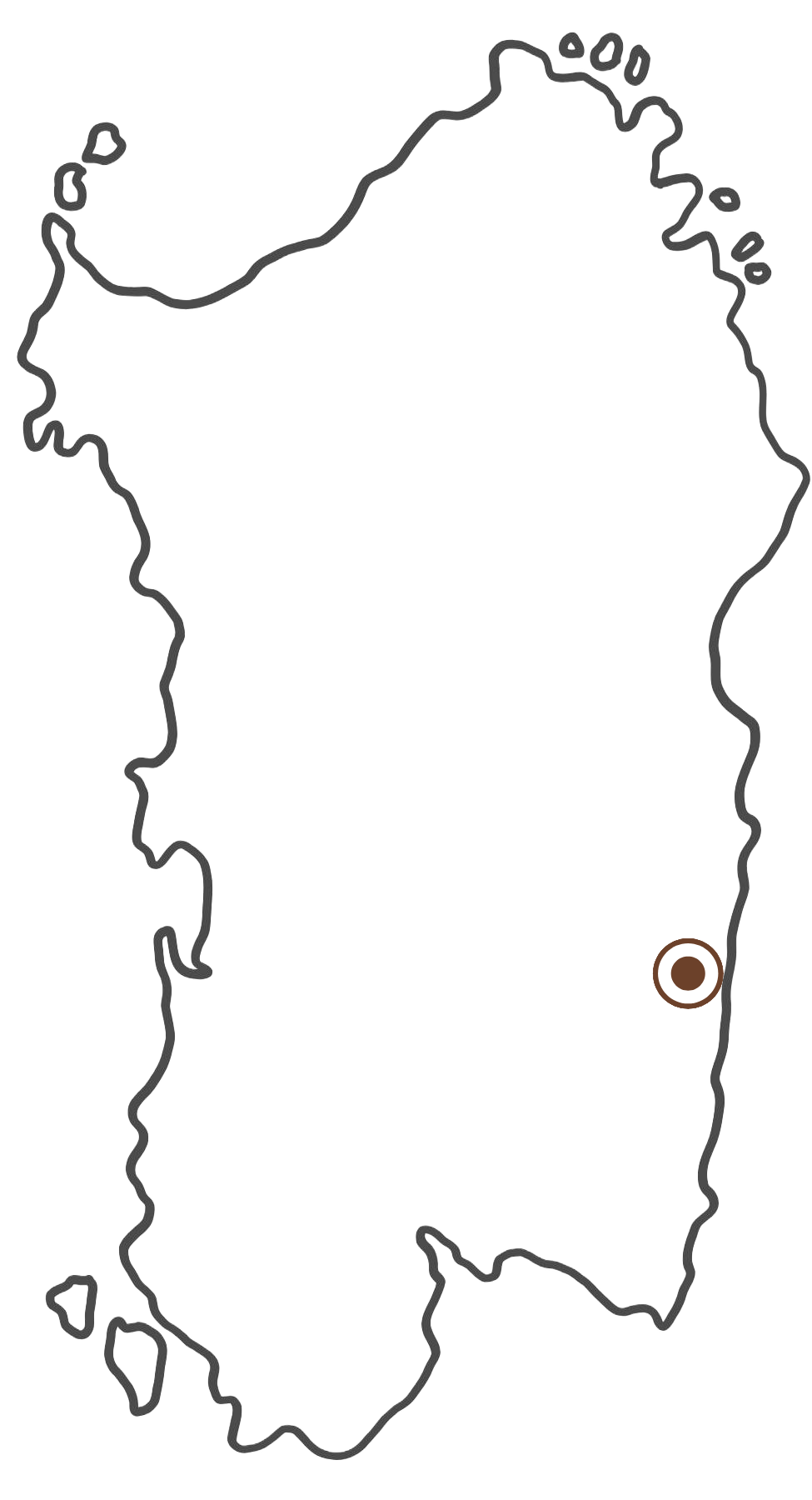


Among the hills of Tertenia, the Nastasi nuraghe breaks into the landscape with the dark tone of local porphyry, splitting the Mediterranean maquis that envelops its flanks.
More than a simple observation point, this complex was born as a true stone fortress designed to guard the plain and block the path for anyone ascending from the coast of southern Ogliastra.
The architecture betrays the ambition of the original building site. Around the central tower, a belt of secondary bodies develops, united by imposing bastions where large dark boulders were dry-stacked to follow the rocky spine of the hill. Although time has caused the upper levels to collapse, filling the interior passageways with rubble, the surface of the external walls maintains the compactness of the defensive design.
Outside the defensive perimeter, the stone bases of the huts descend along the slopes, confirming that Nastasi was not an isolated outpost, but the political and economic heart of a settled community. During the Bronze Age, the local community found its reference point here to organize flocks, distribute crops, and guarantee the security of an entire coastal sector of eastern Sardinia.