Mining Heritage

A journey through mining sites, historical memory, and timeless landscapes

Overview

This itinerary crosses the Sulcis Iglesiente and the Costa Verde, following the traces of a mining past that has shaped landscapes, architecture, and identity. It’s a journey unlike any other: here, the sea and nature are in constant dialogue with what remains of human activity—structures suspended over the void, workers’ villages, and silences that tell stories of labour and hardship.


The route begins in Iglesias, the historical and cultural heart of the mining region, a key point for understanding the entire extraction system of the area. From here, it continues towards the coast to Porto Flavia, a masterpiece of mining engineering carved into the rock, overlooking one of the most iconic views of the coastline. Nearby, Cala Domestica blends the charm of a wild cove with the remains of ancient mining activity, creating a unique contrast between nature and industrial archaeology.

The journey moves on to Buggerru, a small seaside village deeply connected to its mining heritage, before heading inland to Ingurtosu, where time seems to stand still among abandoned buildings and suspended landscapes.

From the hills, the route returns to the coast, reaching the imposing dunes of Piscinas, where nature has slowly reclaimed spaces once dominated by human activity. A little further north, Funtanazza tells another chapter of this story, with its remains overlooking a sea that is often rough and powerful.

The itinerary concludes in Montevecchio, one of the most important mining complexes in Sardinia, where roads, buildings, and structures offer a direct and authentic insight into the life of an entire community shaped by extraction.

It is a journey that alternates cliffs and sand deserts, open sea and silent hills—but above all, it is a journey through memory. Each stop adds a piece to a story of labour, ingenuity, and transformation of the landscape. Here, Sardinia reveals one of its most authentic faces—far from clichés, yet incredibly powerful.

Mining Heritage

🕒 5 Days

🏰 8 Stops

Follow the itinerary in any order you like

Choose the stops that interest you most

Book independently

700 €

Approximate price per person. Costs may vary depending on the season, selected accommodations, and included services.

Iglesias

Image

Entry

Free

Duration

3 hours

Difficulty

Easy

📖 Context

Iglesias is the historic heart of the Sulcis Iglesiente region and the ideal starting point for understanding the mining history of this area. Founded in the medieval period and developed under Pisan rule, the town has been closely connected to mining activities for centuries.
Just a short distance from the town center lies the Monteponi Mine, one of the most important mining complexes on the island and a symbol of a time when Iglesias was one of Sardinia’s main industrial hubs.
Even today, among historic buildings and industrial structures, the connection between the town and its mining past is clearly visible.

🏭 The Site

The Monteponi Mine is a vast industrial archaeology complex that preserves some of the most significant structures of Sardinia’s mining activity. Among them stands out Pozzo Sella, one of the most iconic features of the site, alongside administrative buildings, processing plants, and facilities dedicated to mineral treatment, all of which offer a concrete sense of the organization and complexity of mining work.
Part of the area can be explored freely from the outside, allowing visitors to walk among the buildings and observe the industrial architecture up close. For a more in-depth experience, guided tours are recommended, as they provide access to interior spaces and offer deeper insight into the history of the mine, extraction techniques, and the daily lives of the miners.

☀️ When to Visit

The best times to visit are in the morning and late afternoon, when temperatures are more pleasant and the light enhances the mining structures.
Visiting Monteponi during the cooler hours allows you to explore the area at a relaxed pace and fully enjoy the unique atmosphere of the site.

👟 Practical Tips

When visiting the mine, it’s recommended to wear comfortable shoes or light hiking footwear suitable for uneven terrain. Bring water, a hat, and sun protection, especially during the warmer months.

Porto Flavia

Image

Entry

Ticket

Duration

2 hours

Difficulty

Easy

📖 Context

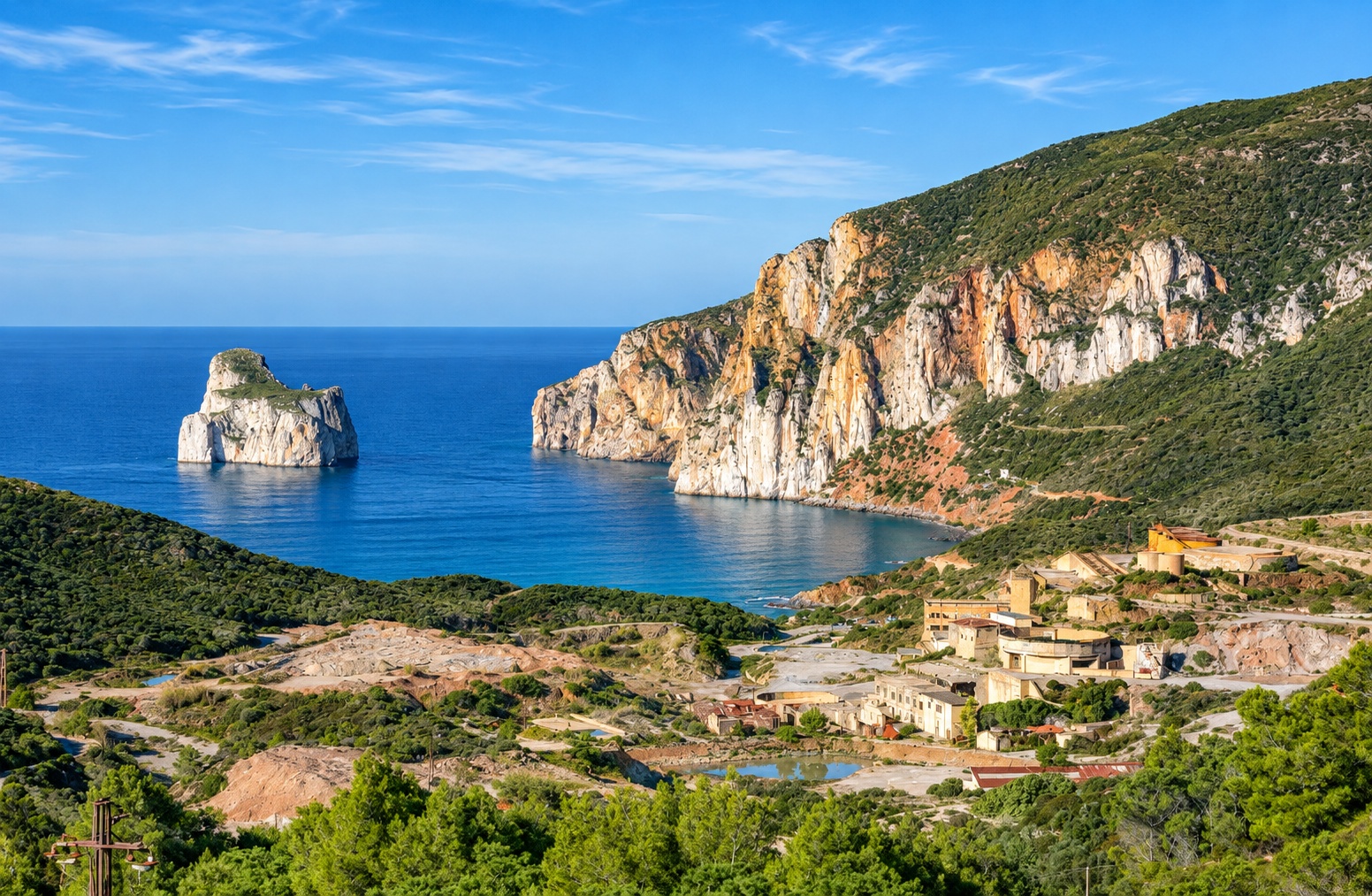
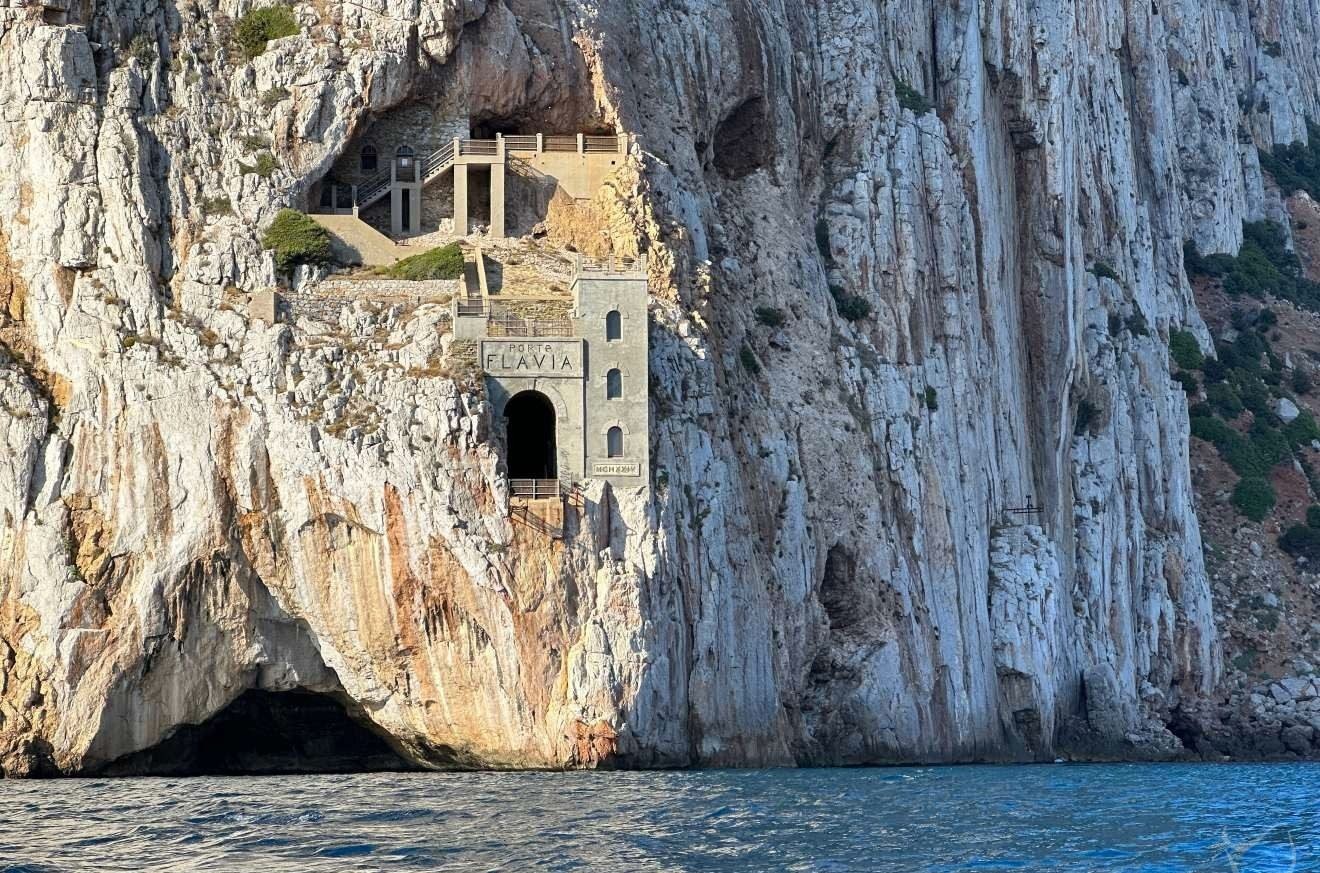
Porto Flavia is one of the most iconic sites in the Sulcis Iglesiente area—an extraordinary feat of mining engineering carved into a sheer sea cliff near Masua.
Built in the early 20th century, it was designed as a revolutionary system for loading minerals directly onto ships, eliminating the long and complex overland transport routes.
Overlooking the open sea and facing the famous Pan di Zucchero sea stack, Porto Flavia is now one of the most striking testimonies of Sardinia’s industrial past, where engineering and landscape blend in a truly remarkable way.

🏭 The Site

Porto Flavia runs through the rock via a series of overlapping tunnels, designed to streamline the transport and loading of minerals. The system was organized across two main levels: the upper level, used for receiving and storing materials, and the lower level, directly connected to the sea, where the minerals were loaded onto ships using an ingenious system of conveyor belts and silos.
Today, the site can only be visited through guided tours, which provide access to the internal tunnels and offer a detailed understanding of how this impressive facility operated. The route takes you through rock-carved spaces all the way to a panoramic opening overlooking the sea—one of the most breathtaking viewpoints along the entire coastline.

☀️ When to Visit

The ideal time to visit is in the morning, when the light illuminates the cliff and the sea, creating perfect conditions to fully appreciate the scenery. The afternoon can also offer beautiful views, although temperatures tend to be higher, especially during the summer months.
Since visits are scheduled at fixed times, it’s best to plan ahead and choose the time slot that suits you best.

👟 Practical Tips

For the visit, it’s recommended to wear comfortable shoes suitable for walking on slightly uneven surfaces inside the tunnels. Bring water and, during the warmer months, a hat for the outdoor areas.
Inside, temperatures are generally cooler, so it can be useful to have a light extra layer with you.

Cala Domestica

Image

Entry

Free

Duration

2 hours

Difficulty

Medium

📖 Context

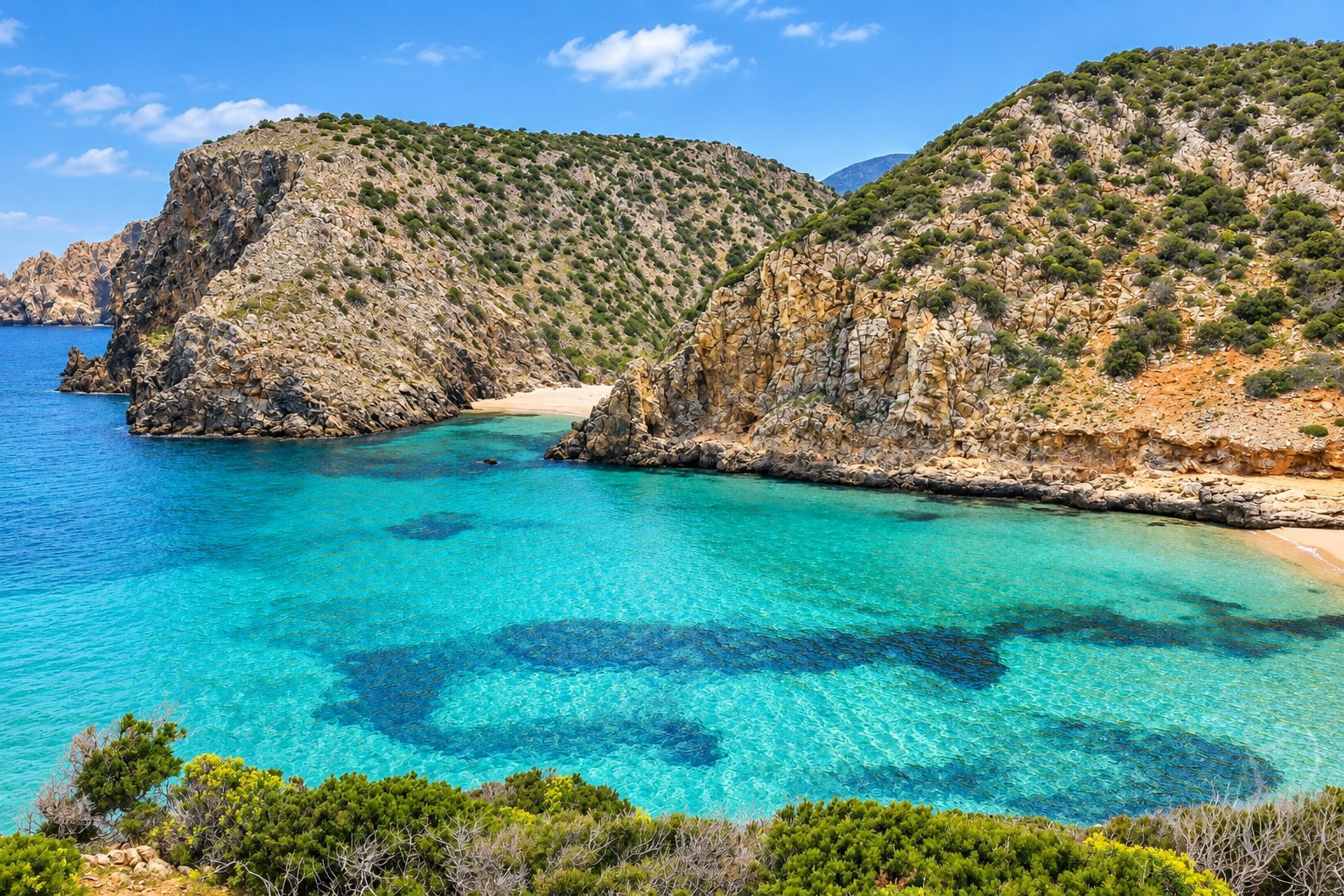
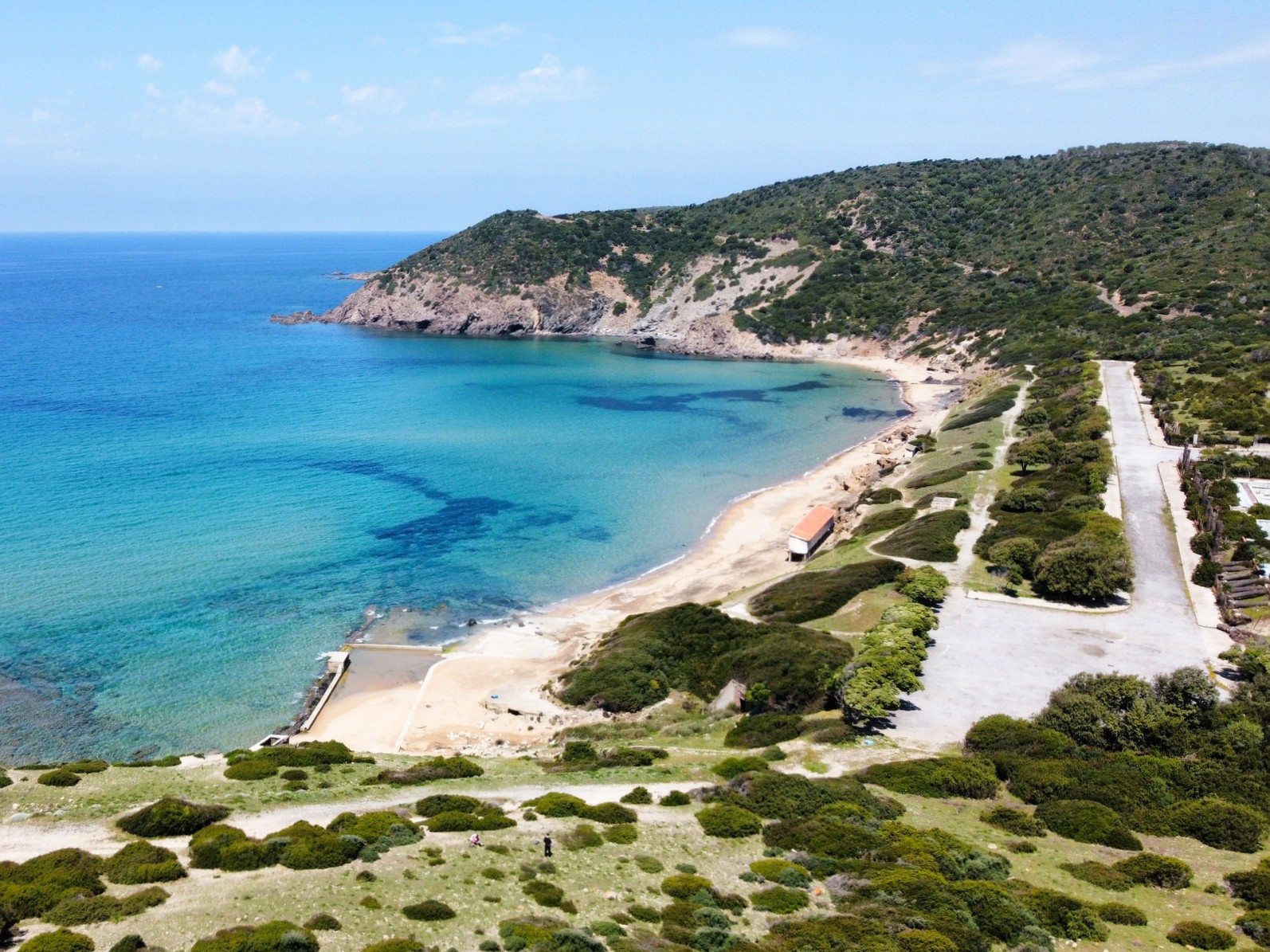
Cala Domestica lies along the Sulcis Iglesiente coast and is one of the most evocative stops along the mining itinerary. Nestled between high limestone cliffs, this cove uniquely blends the beauty of the sea with the memory of its mining past.

In the past, Cala Domestica served as an important loading point for minerals: materials extracted from inland mines were brought here to be shipped out. Today, traces of that history are still visible, set within a landscape that has gradually returned to its natural balance.

🏭 The Site

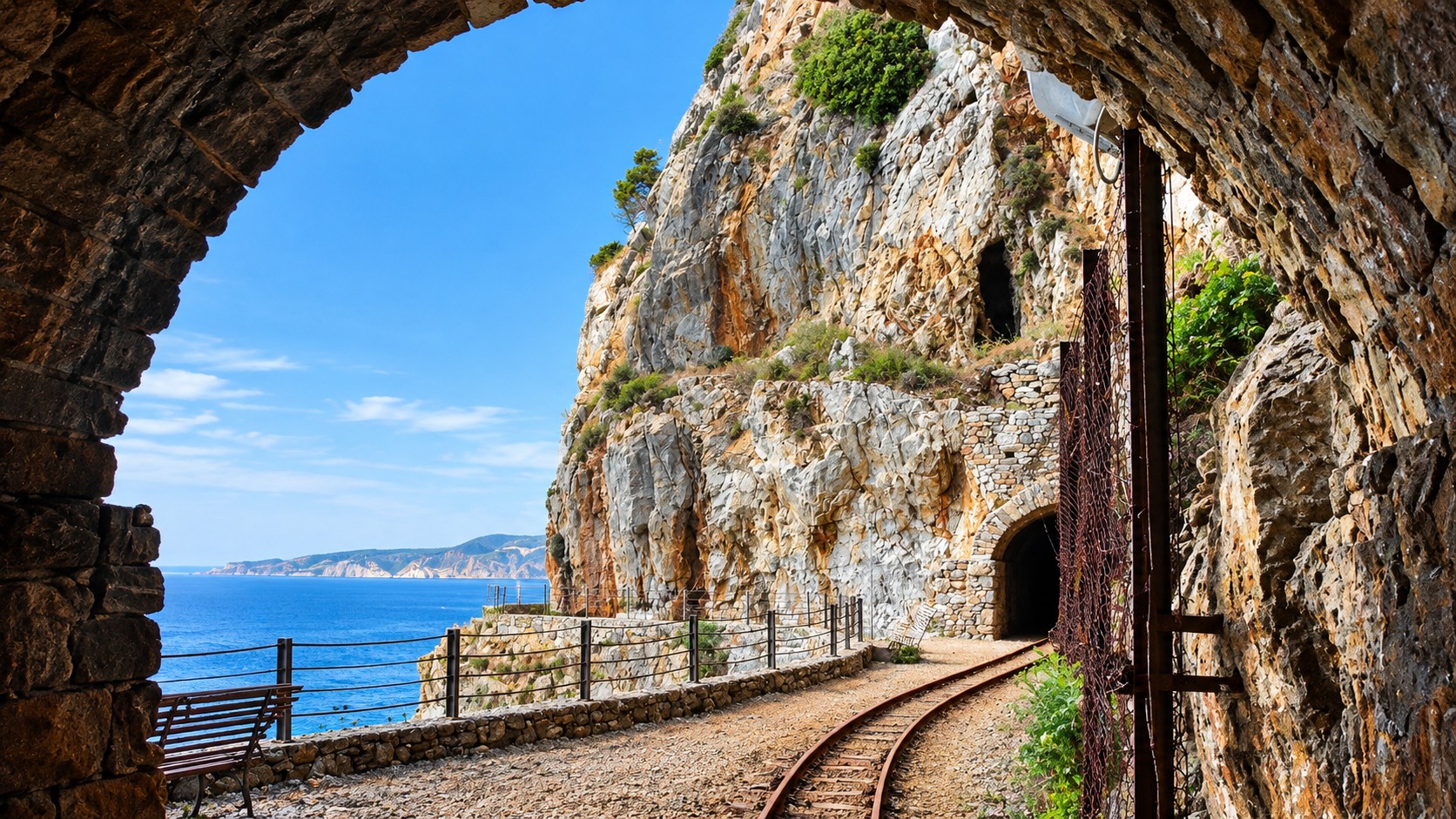
The area still preserves several remnants of its mining activity, seamlessly integrated into the natural surroundings. Behind the beach, you’ll find the remains of warehouses and storage facilities once used for mineral stockpiling, while along the rocky walls you can spot old tunnels carved into the stone.

One of the most distinctive features is a small tunnel that leads to a hidden cove—a second, more secluded and wilder beach that offers a completely different perspective on the area.

Access is easy and well signposted: from the parking area, a short walk takes you down to the cove, allowing you to observe both the natural features and the historical elements of the site up close.

☀️ When to Visit

The best time to visit is in the morning, when the light directly illuminates the cove and the sea is usually calmer. Late afternoon can also be particularly atmospheric, especially when the cliffs begin to cast long shadows across the beach.

During the summer months, it’s best to avoid the middle of the day, when both the heat and the number of visitors are at their peak.

👟 Practical Tips

Comfortable shoes are enough to reach Cala Domestica, but if you plan to explore the surrounding area and the old mining structures, sturdier footwear is recommended.

Bring water, sun protection, and everything you need for the day: despite being easily accessible, the cove still retains a distinctly wild character.

Buggerru

Image

Entry

Ticket

Duration

3 hours

Difficulty

Easy

📖 Context

Buggerru is a small seaside village set between high cliffs along the Sulcis Iglesiente coast. Born and developed around mining activity, it was for a long time one of the most important centers for the extraction and transport of minerals.
Even today, Buggerru retains a strong connection to its past: between the harbor, old mining structures, and the layout of the town, you can clearly sense the identity of a place shaped by the close relationship between work and the sea.

🏭 The Village

The town is built around its harbor, which once played a strategic role in loading minerals from inland mines onto ships.
Around this area, you can still see buildings and structures linked to industrial activity, some of which have been repurposed or integrated into the urban setting.
Walking through the streets, you’ll notice houses, warehouses, and glimpses of everyday life that reflect the lives of miners and their families. Not far from the center, there are also other mining sites of interest, historically connected to Buggerru and easily accessible.
The visit is self-guided and unfolds naturally, following the rhythm of the village as you move between the harbor, beaches, and scenic viewpoints.

☀️ When to Visit

The best time to visit is in the morning or late afternoon, when the light enhances the contrast between the cliffs, the sea, and the village architecture.
During the summer, Buggerru can be busier—especially in the middle of the day—while in the shoulder seasons it retains a quieter and more authentic atmosphere.

👟 Practical Tips

Comfortable shoes are all you need to explore Buggerru, perfect for walking between the town center, the harbor, and the nearby trails.

Ingurtosu

Image

Entry

Free

Duration

2 hours

Difficulty

Medium

📖 Context

Ingurtosu lies inland in the Costa Verde area and is one of the most representative sites of Sardinia’s mining history. Once a thriving center for lead and zinc extraction, it now appears as a village suspended in time, surrounded by quiet hills and unspoiled nature.
Here, the landscape clearly reflects the human presence: buildings, roads, and industrial structures emerge from the greenery, creating a unique balance between memory and environment. It’s a place that invites you to slow down and observe, rather than rush through.

🏭 The Structures

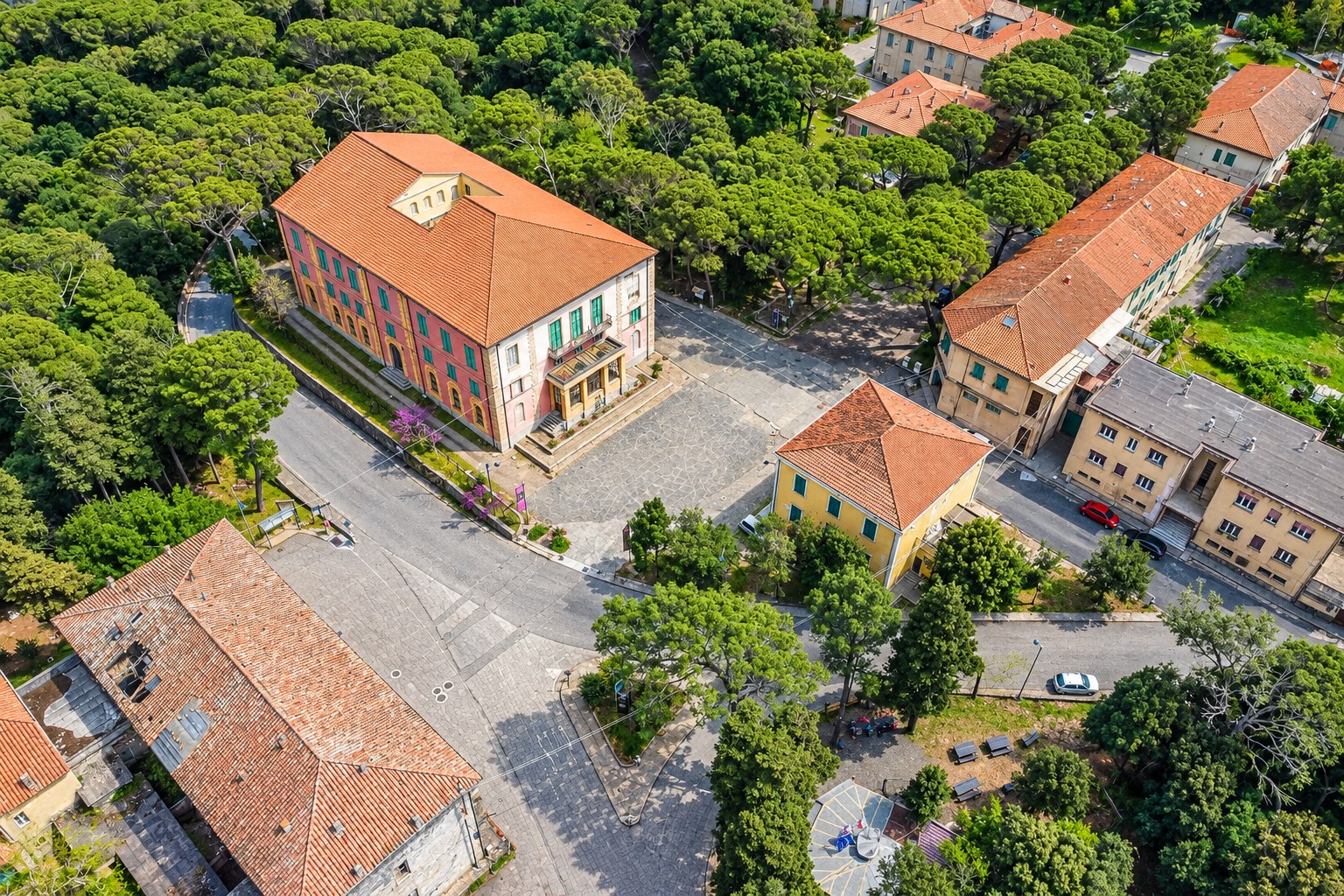
The Ingurtosu mining complex is laid out like a true village, with buildings that reflect the social and industrial organization of the time. Among them stands the Castle of Ingurtosu, once the residence of the mining management, which overlooks the surrounding area and remains one of the site’s most recognizable landmarks.
Alongside the main buildings, you’ll find structures related to mineral processing, warehouses, and workers’ housing, arranged along roads that wind through the hills. Much of the area can be explored freely, allowing visitors to walk through the site and observe the details of its industrial architecture up close.
To gain a deeper understanding of the site’s history, guided tours or information points may be available during certain periods, offering insight into how the mine operated and the daily life of the community that once lived here.

☀️ When to Visit

The ideal time to visit is in the morning or late afternoon, when the light enhances the striking contrast between the mining buildings and the natural landscape.
During the summer months, temperatures can be quite high, so it’s best to avoid the middle of the day. Spring and autumn offer perfect conditions for exploring the area at a relaxed pace.

👟 Practical Tips

For visiting Ingurtosu, it’s recommended to wear comfortable shoes or light hiking footwear, suitable for dirt paths and uneven terrain.
Bring water with you and take your time exploring: Ingurtosu isn’t a place to rush through, but one to experience slowly, letting the details and its unique atmosphere guide you.

Piscinas

Image

Entry

Free

Duration

2 hours

Difficulty

Medium

📖 Context

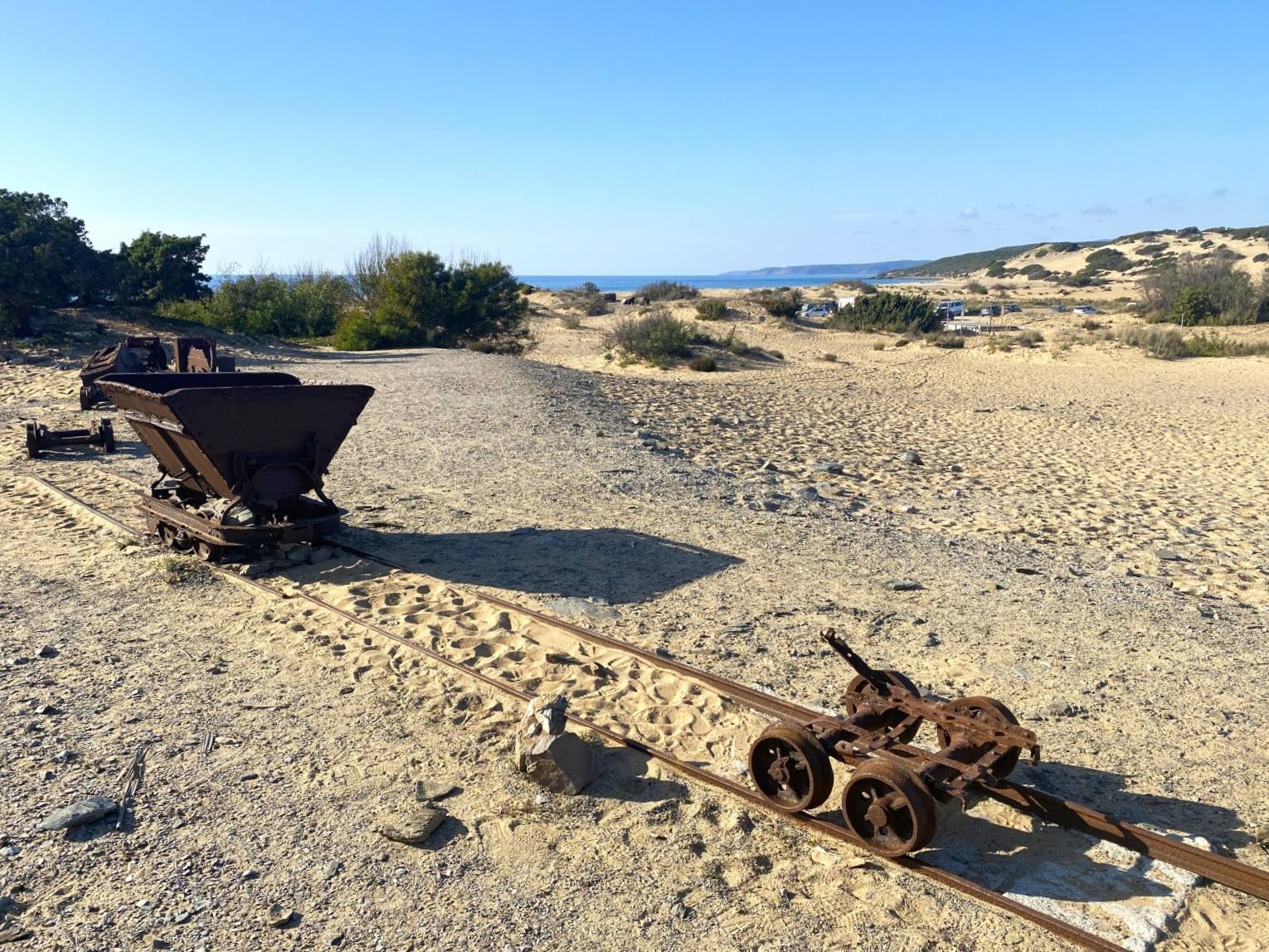
Piscinas Beach is one of the most spectacular stops along the Costa Verde—a place where nature has reclaimed the traces of past mining activity. Here, one of the largest dune systems in Europe stretches all the way to the sea, with towering الرمال shaped by the wind.
Behind the beach, signs of the mining past are still visible, now largely absorbed into the landscape. Piscinas perfectly represents the balance between history and nature: a place where human remnants coexist with a vast, wild, and ever-changing environment.

🏭 The Structures

The area still preserves some evidence of its mining past, mainly visible in the historic buildings once used for processing and transporting minerals. Today, these structures have been partially restored and blend into the landscape without disrupting its balance, serving as subtle reference points within the scenery.
The visit is entirely self-guided: you can walk along the beach, explore the dunes, and observe the remains of industrial archaeology scattered throughout the area. This is not a structured mining site with defined routes, but an open environment where history is read directly through the landscape.

☀️ When to Visit

The best time to visit is in the morning or late afternoon, when the light enhances the shapes of the dunes and the contrast with the sea. During the middle of the day—especially in summer—the heat can be intense and the sand extremely hot.
Spring and autumn are ideal for experiencing Piscinas in a more relaxed way, with more comfortable weather conditions.

👟 Practical Tips

For visiting Piscinas, it’s best to wear comfortable shoes or sandals suitable for walking on sand, keeping in mind that distances can be quite long.
Bring water, a hat, and sun protection: shade is almost nonexistent, and the sun can be very strong. If you plan to explore the dunes, move with care and respect for the environment—this is a delicate ecosystem where every element plays a role in maintaining the natural balance.

Funtanazza

Image

Entry

Free

Duration

2 hours

Difficulty

Medium

📖 Context

Funtanazza lies along the Costa Verde, in a stretch of coastline where the sea meets the legacy of mining activity. Just a short distance from the beach stand the remains of a former seaside colony built for miners’ children—a place now quiet, suspended between past and present.
Funtanazza is a unique stop along the itinerary because it reveals a different side of mining history: not only work and extraction, but also daily life, community, and spaces designed for leisure. All of this is set within an open landscape where the sea is often rough and the wind is a constant presence.

🏭 The Structure

The most recognizable feature is the former seaside colony building—an imposing structure overlooking the beach, now abandoned but still capable of telling much about the area’s past.
Around it, the setting is simple and direct: the beach, the sea, and only a few other traces of human presence. This is not a structured or museum-like site, but an open space where you can move freely and observe the exterior of the building up close.
The visit is short but impactful, largely due to the strong contrast between the structure and the surrounding natural landscape—an atmosphere that’s hard to find elsewhere along the coast.

☀️ When to Visit

The best time to visit is in the morning or late afternoon, when the light enhances both the building and the sea. During the middle of the day—especially in summer—the sun can be intense and the wind stronger.
Spring and autumn are ideal for experiencing Funtanazza at a slower pace and with fewer visitors.

👟 Practical Tips

Comfortable shoes are sufficient for visiting Funtanazza, but if you plan to get closer to the structure, it’s important to move carefully and avoid entering restricted or unsafe areas.

Montevecchio

Image

Entry

Ticket

Duration

3 hours

Difficulty

Easy

📖 Context

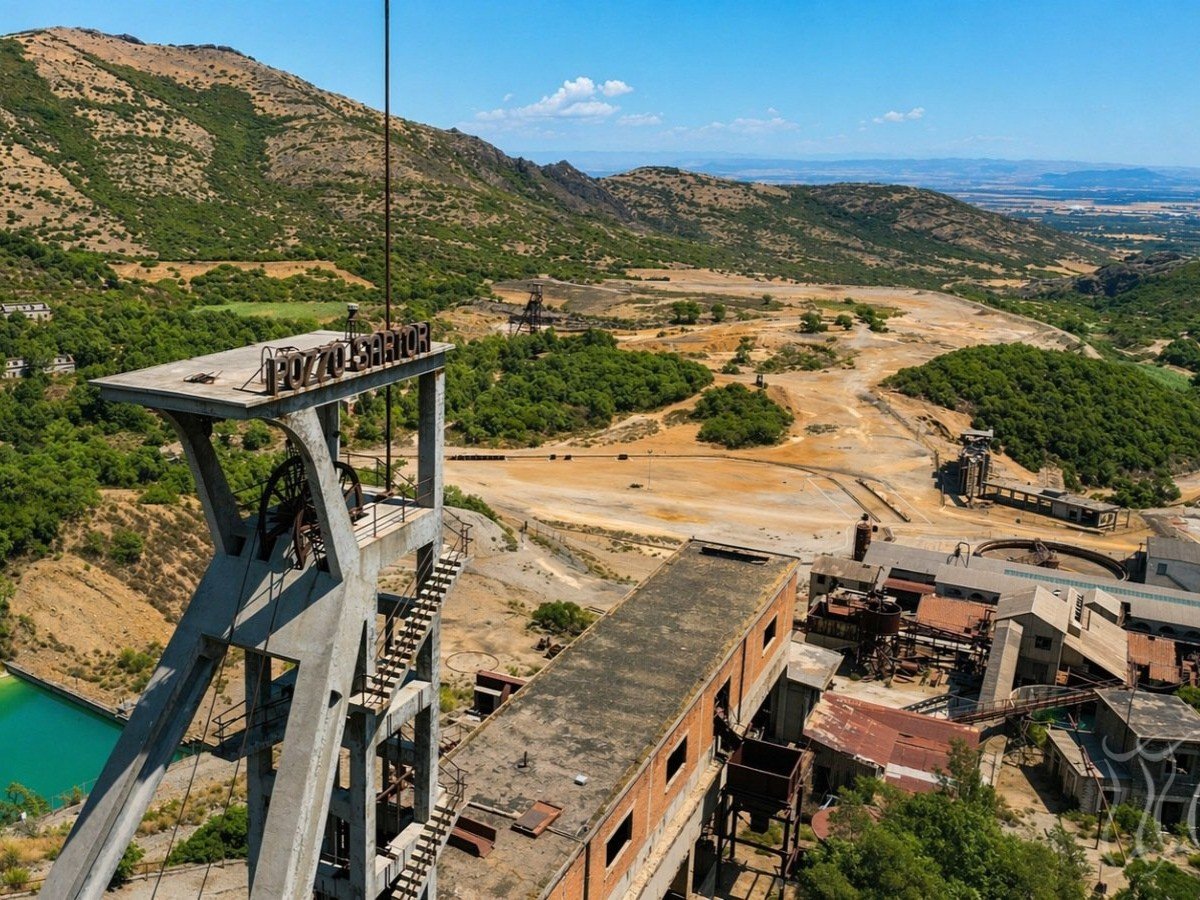
The Montevecchio mining complex is one of the most important examples of industrial archaeology in Sardinia and a key site for understanding the region’s mining history. Located inland in the Costa Verde area, among rolling hills and woodlands, Montevecchio was one of the island’s main mining centers for over a century.
Today, the site preserves an extraordinary heritage of buildings, infrastructure, and pathways that clearly tell the story of the lives and work of entire generations of miners. It is a place where memory remains tangible, set within a vast and quiet landscape.

🏭 The Site

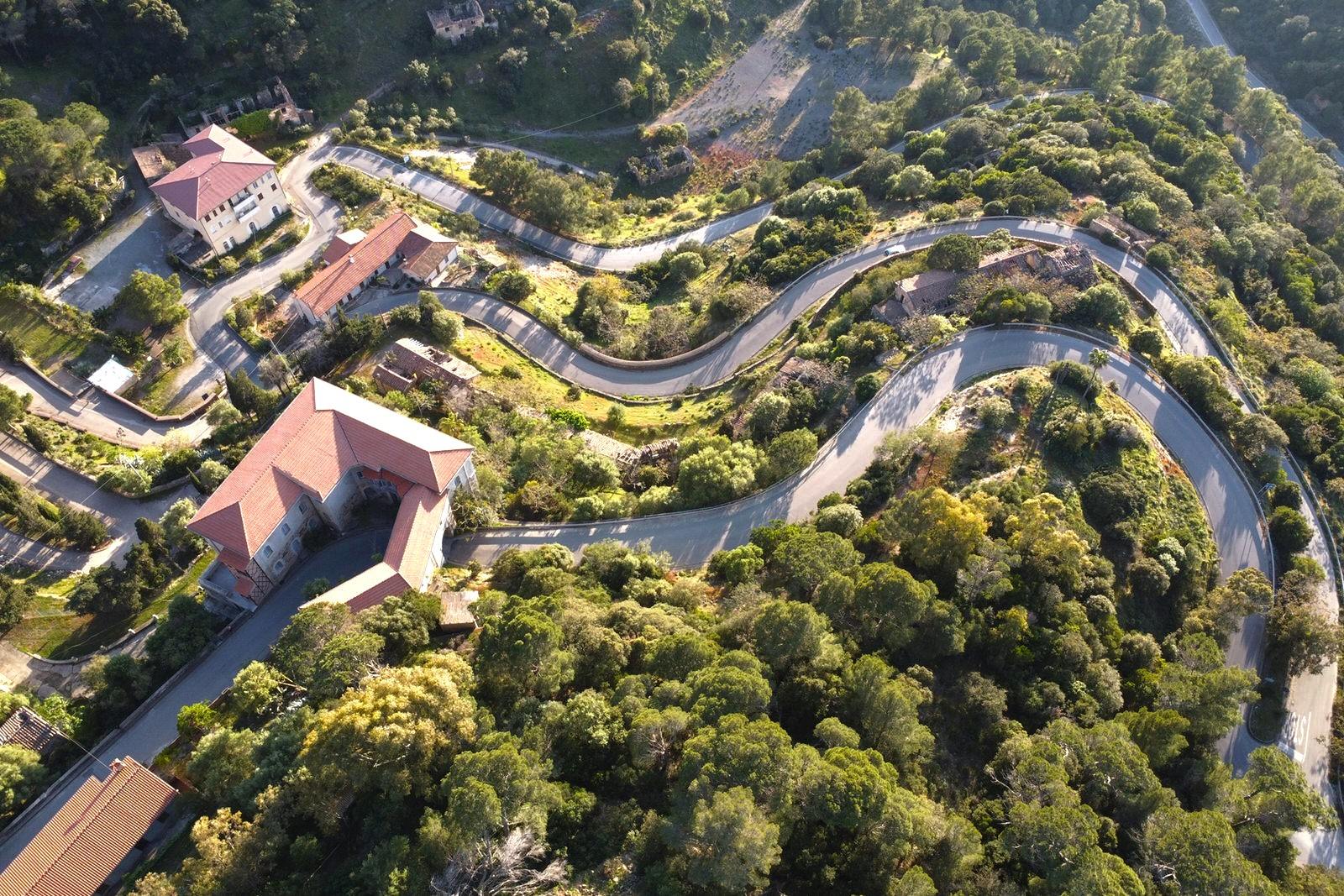
Montevecchio unfolds as a fully developed mining system, with different areas reflecting the industrial and social organization of the time. You can see processing plants, workshops, shafts, and technical structures, alongside buildings once used for administration and management.
Part of the complex is now accessible through guided tours, which also include interior spaces and offer insight into how the mine operated, from extraction techniques to mineral processing. These visits also provide a glimpse into the daily lives of the workers, giving a well-rounded understanding of the site.
Alongside the structured areas, large portions can still be explored freely from the outside, allowing visitors to walk among the buildings and observe the industrial structures set within the natural landscape.

☀️ When to Visit

The best time to visit is in the morning or late afternoon, when temperatures are milder and the light enhances both the architecture and the surrounding landscape.
During summer, it’s advisable to avoid the hottest hours of the day, while spring and autumn are ideal for exploring the area at a more relaxed pace.

👟 Practical Tips

For visiting Montevecchio, it’s recommended to wear comfortable shoes or light hiking footwear, suitable for dirt paths and uneven surfaces.

Cerca