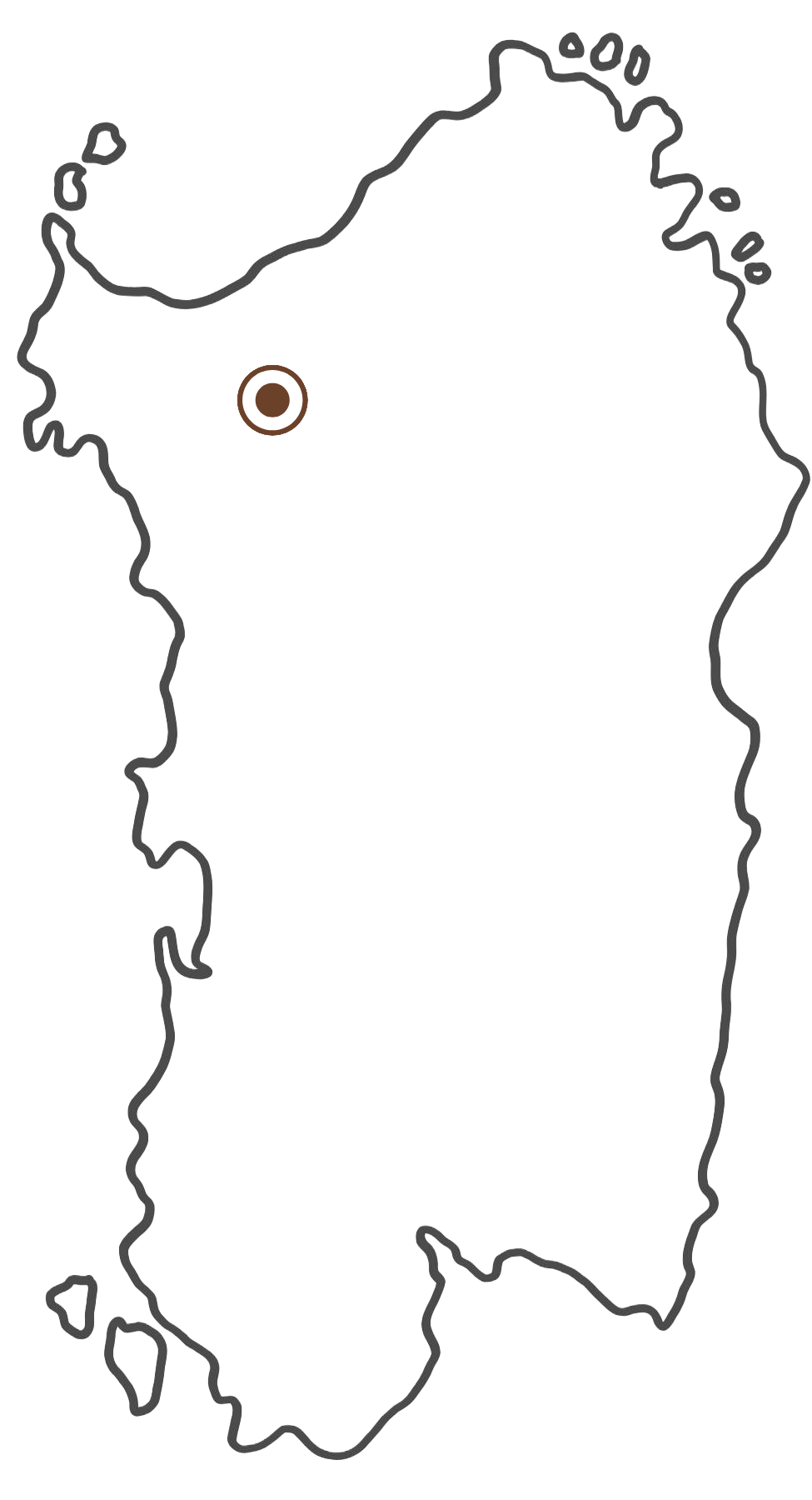


Isolated in the plain of Codrongianos, the Basilica of Sant'Antioco di Saccargia strikes visitors immediately with the rhythmic and marked alternation of its bands of white limestone and black basalt.
Consecrated in 1116 by the will of the Judge of Torres, Constantine I, and his wife Marcusa, the abbey was entrusted to Camaldolese monks who made it a religious and economic center of primary importance throughout northern Sardinia.
The facade soars toward the sky, preceded by a portico with pointed arches supported by columns whose capitals display monsters and winged figures sculpted with great expression. Next to the tall and solemn single-nave hall stands the majestic square bell tower, enriched by mullioned windows and hanging arches. The architecture synthesizes Romanesque influences of Pisan and Pistoian origin, reinterpreted by Tuscan master craftsmen who worked on the building site during the twelfth century.
The interior preserves a thirteenth-century fresco cycle in the central apse, one of the extremely rare examples of medieval mural painting that has survived the passage of time on the island. The scenes depict the life of Christ, post-resurrection appearances, and a figure of the praying Madonna surrounded by the apostles. This pictorial scheme and the grandeur of the building testify to the political prestige achieved by the Giudicato of Torres and the deep penetration of continental monasticism into Sardinian society of the era.