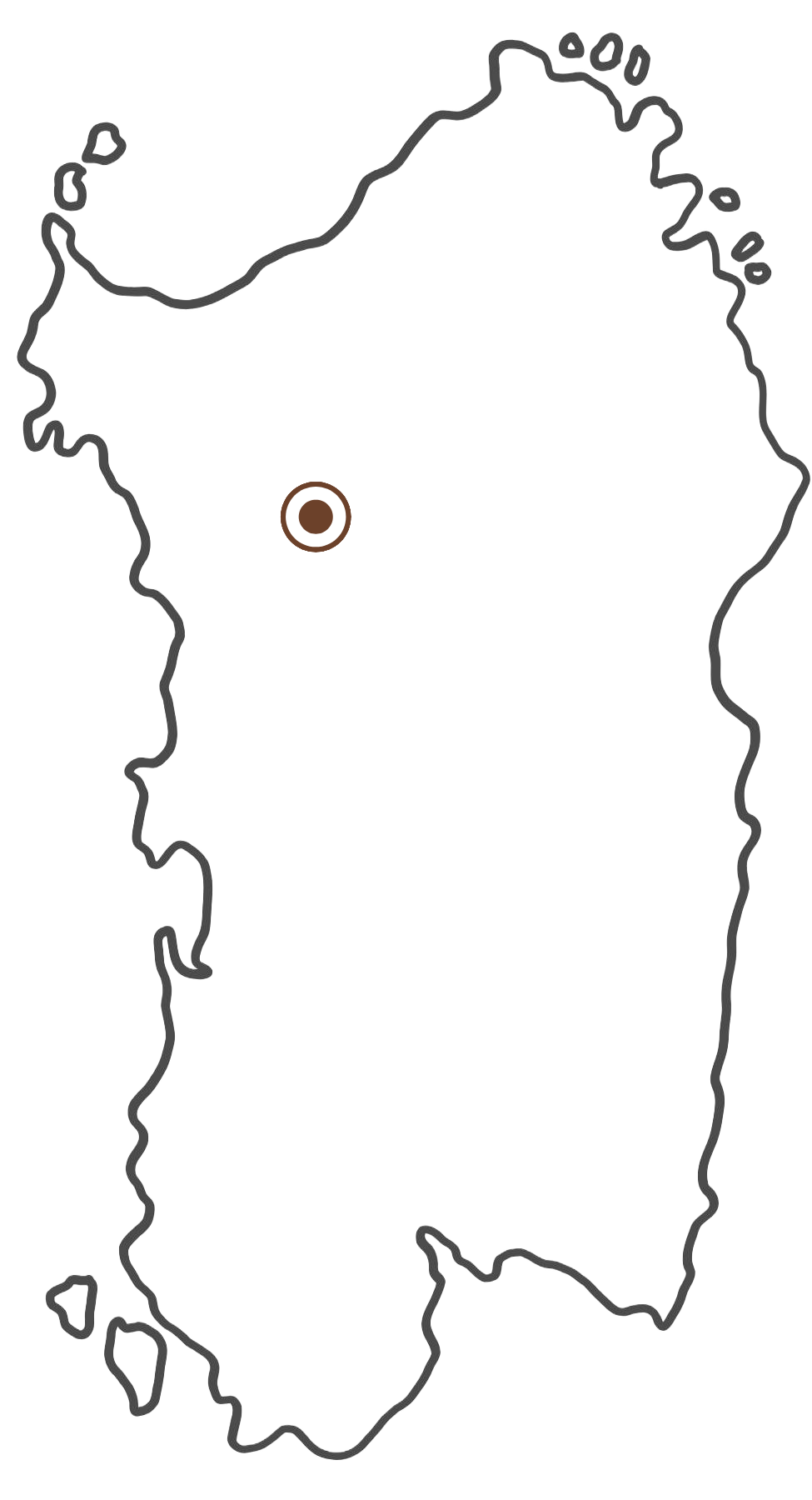


Carved into the limestone bench of Bonorva with almost surgical precision, the Santu Ainzu necropolis located on the slopes facing the Meilogu plain presents itself as a coordinated sequence of squared openings penetrating the hill.
The outcropping rock reveals straight access corridors, vestibules, and underground chambers arranged according to a rigorous spatial logic.
The entrances showcase meticulous and continuous finishing work. The subterranean walls meticulously imitate the wood and clay of the dwellings of the living, featuring relief beams carved into the ceiling, raised circular hearths, and stylized bull horns engraved to mark the inner thresholds. Every environment responds to a precise project: transforming the darkness of the rock into a familiar and protected place where the community's deceased could be laid to rest.
Centuries of reuse by shepherds and farmers have modified the surfaces, blackening the ceilings with the smoke of bonfires and wearing down the limestone steps. Nonetheless, the site situated near Giave retains its substance as a magnificent underground work. Santu Ainzu demonstrates how proficient prehistoric Sardinian populations were at rock cutting, leaving a permanent architectural mark across the territory.