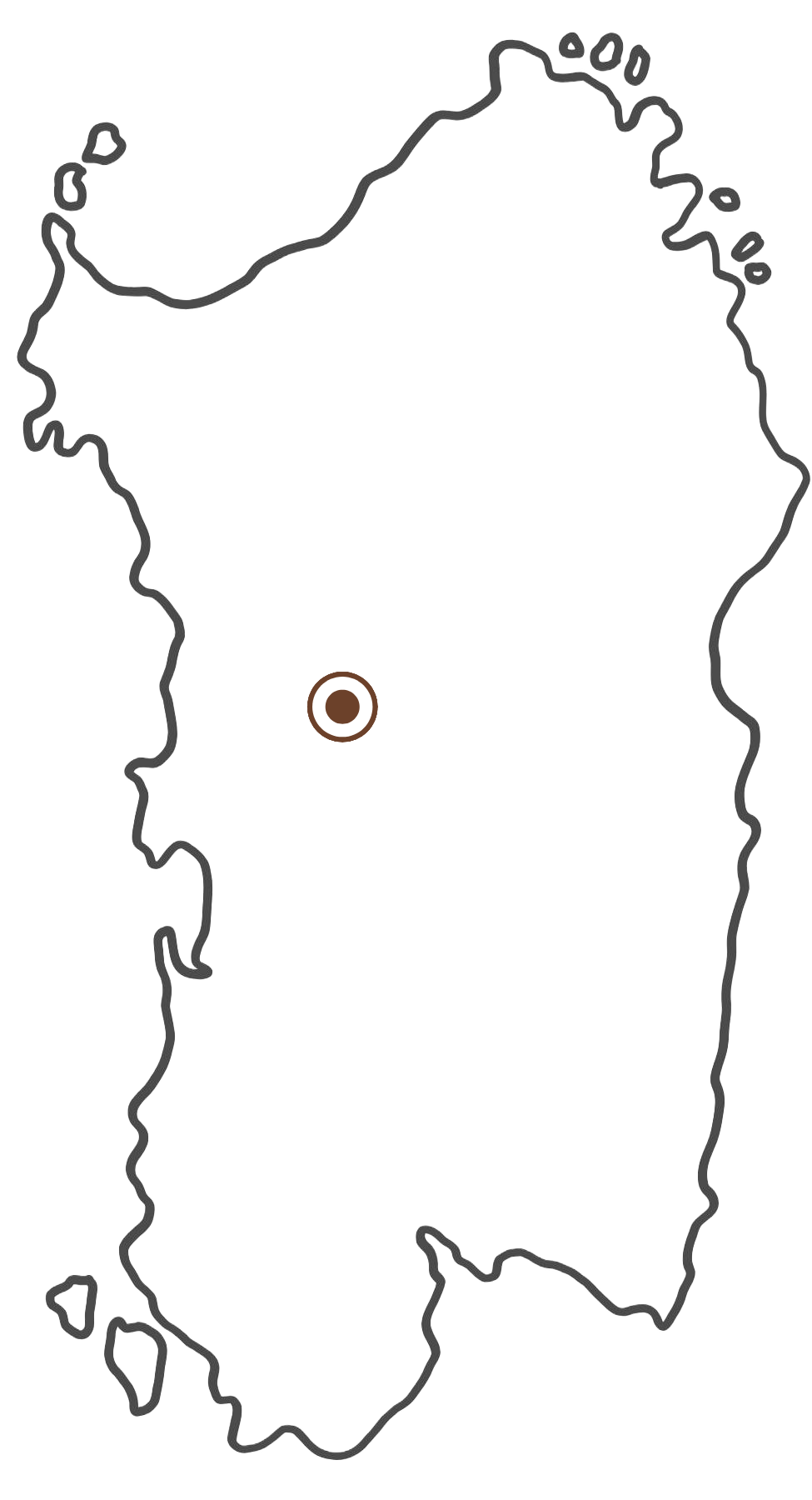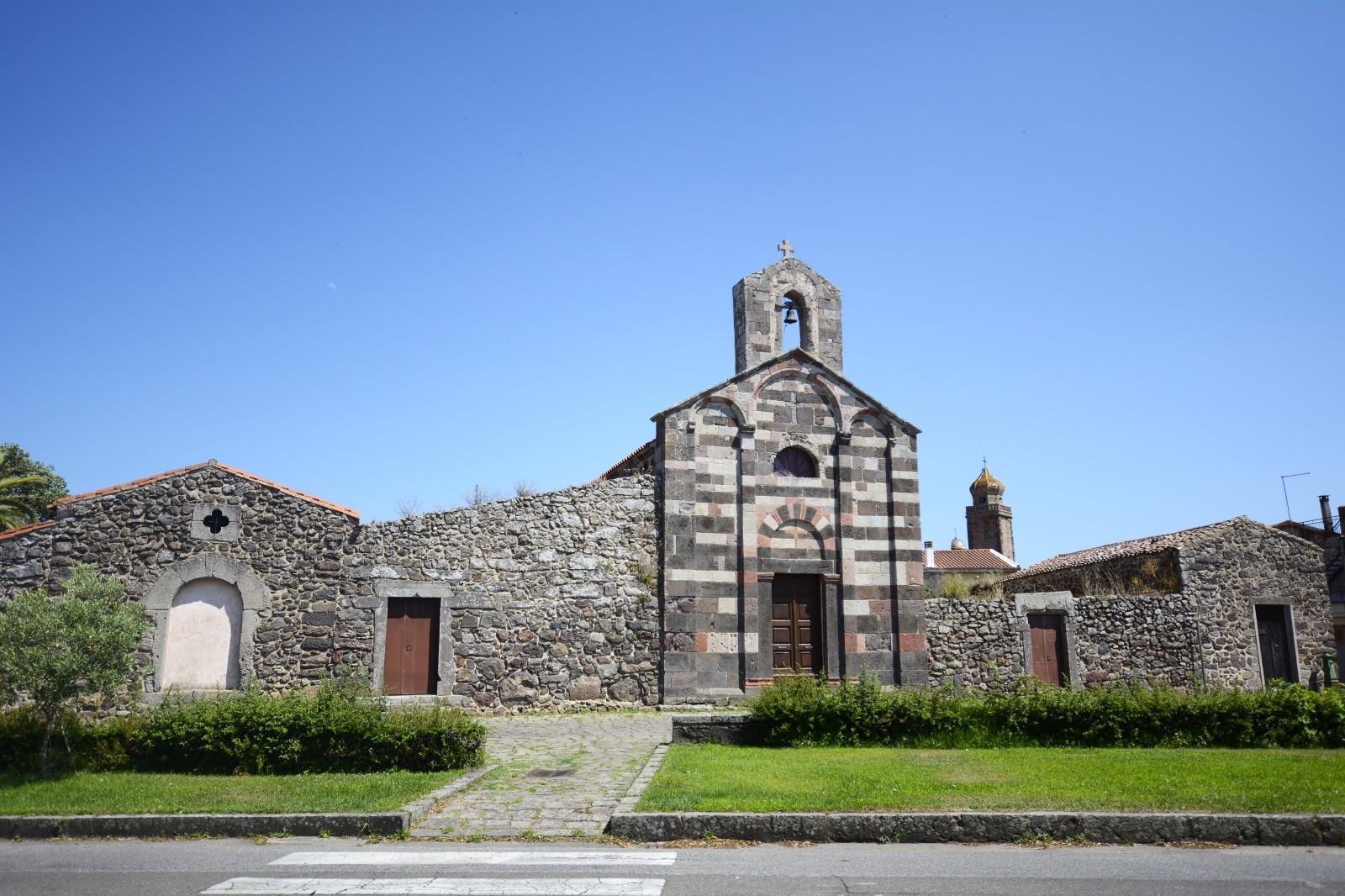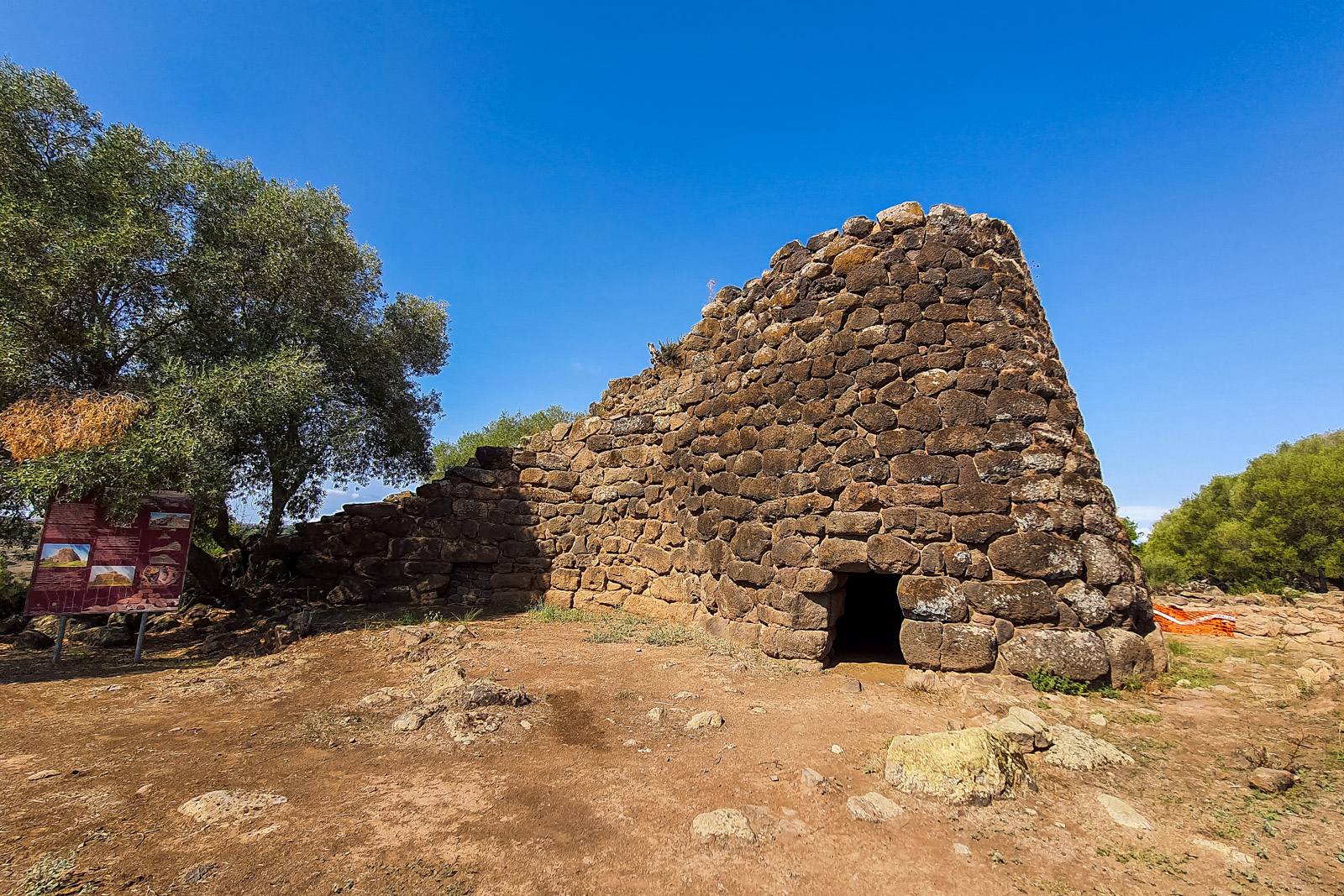


In Ghilarza, a singular monument is preserved due to its elliptical plan, shaped like an overturned boat, quite different from the usual circular schemes. The work utilizes carefully dressed trachite and basalt blocks, arranged along perimeters that narrow toward the top.
The entrance leads into a gallery topped by an imposing stone lintel. From the passageway, one accesses the base chamber, where the roof combines the placement of corbeled courses with a horizontal closure, creating a rare living solution. A staircase carved into the cavity of the masonry still allows visitors today to climb to the upper level, where traces of the intermediate floor remain.
The value of this site lies in the coexistence of techniques belonging to different historical moments. The simultaneous presence of corridor rooms and vaulted chambers shows the overlap of distinct building phases, the result of interventions that took place over the centuries. Orgono constitutes an essential reference for understanding the flexibility of prehistoric builders in adapting spaces according to the community's changing needs.
The building fits into a context rich in evidence, offering a clear cross-section of local resource management. Observing these masonry works allows visitors to grasp the practical ingenuity of ancient populations.