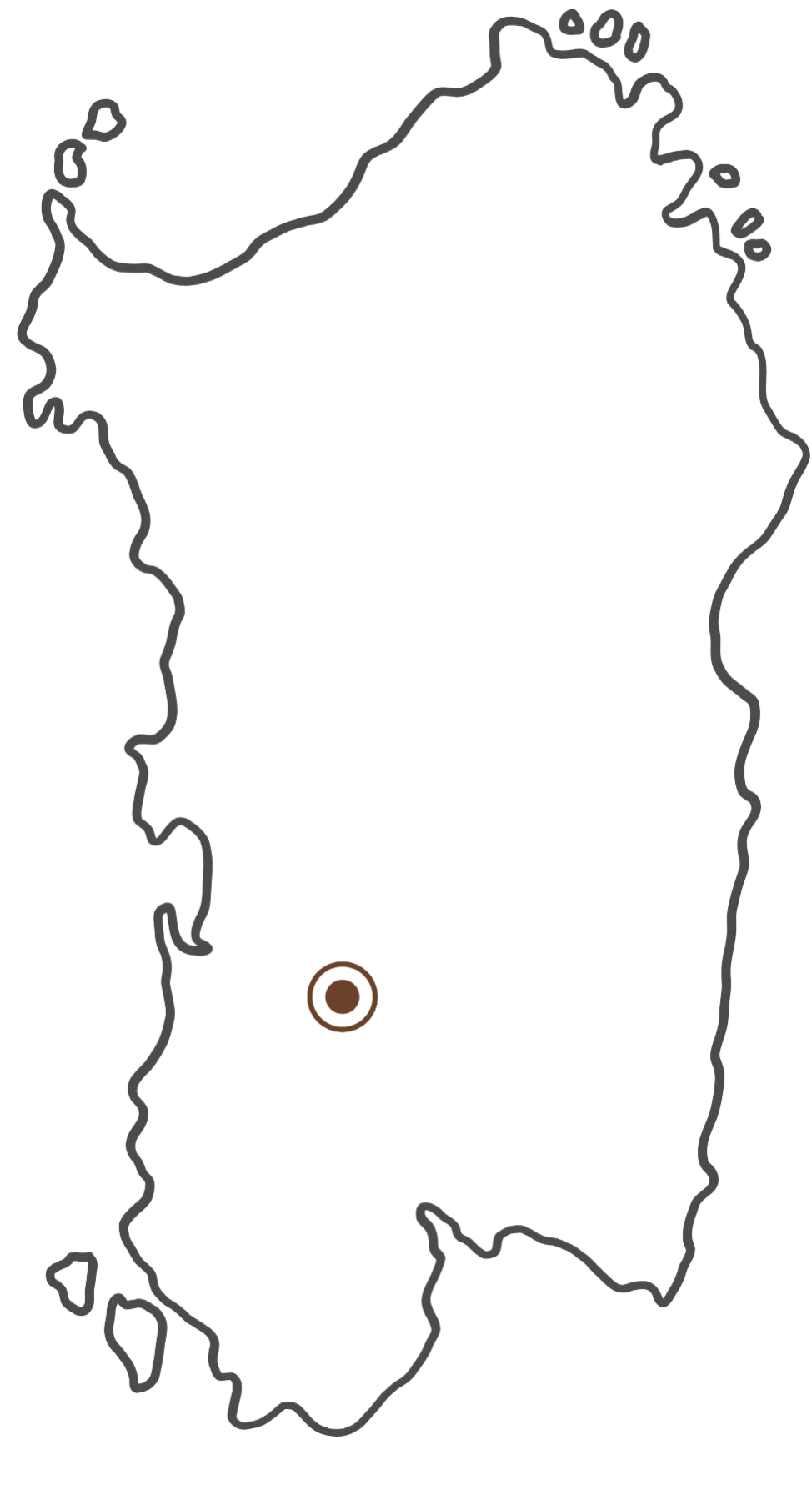


Here, just beyond the bucolic village of Lunamatrona, a great sandstone stele rises solemnly, like a sentinel that has stood watch for millennia. Behind it, a long funerary corridor cuts into the earth and into memory, telling of ancient peoples who honored their dead as heroes: this is the Tomb of the Giants of Su Cuaddu ’e Nixias.
Built in the heart of the Bronze Age, the tomb stands upon an even older burial site — a meeting of eras and rituals, of hands that shaped stone in defiance of oblivion. Its name, Su Cuaddu ’e Nixias, recalls a local legend: it is said that the hole in the stele was used to tie a mysterious horse, perhaps a symbol of passage to the afterlife.
Today, amid the silence of the fields and the whisper of the wind, the tomb still speaks. At sunset, when light caresses the ancient stones and the sky turns to gold, it truly feels like standing at the threshold between two worlds — that of the living, and that eternal realm of the ancients.