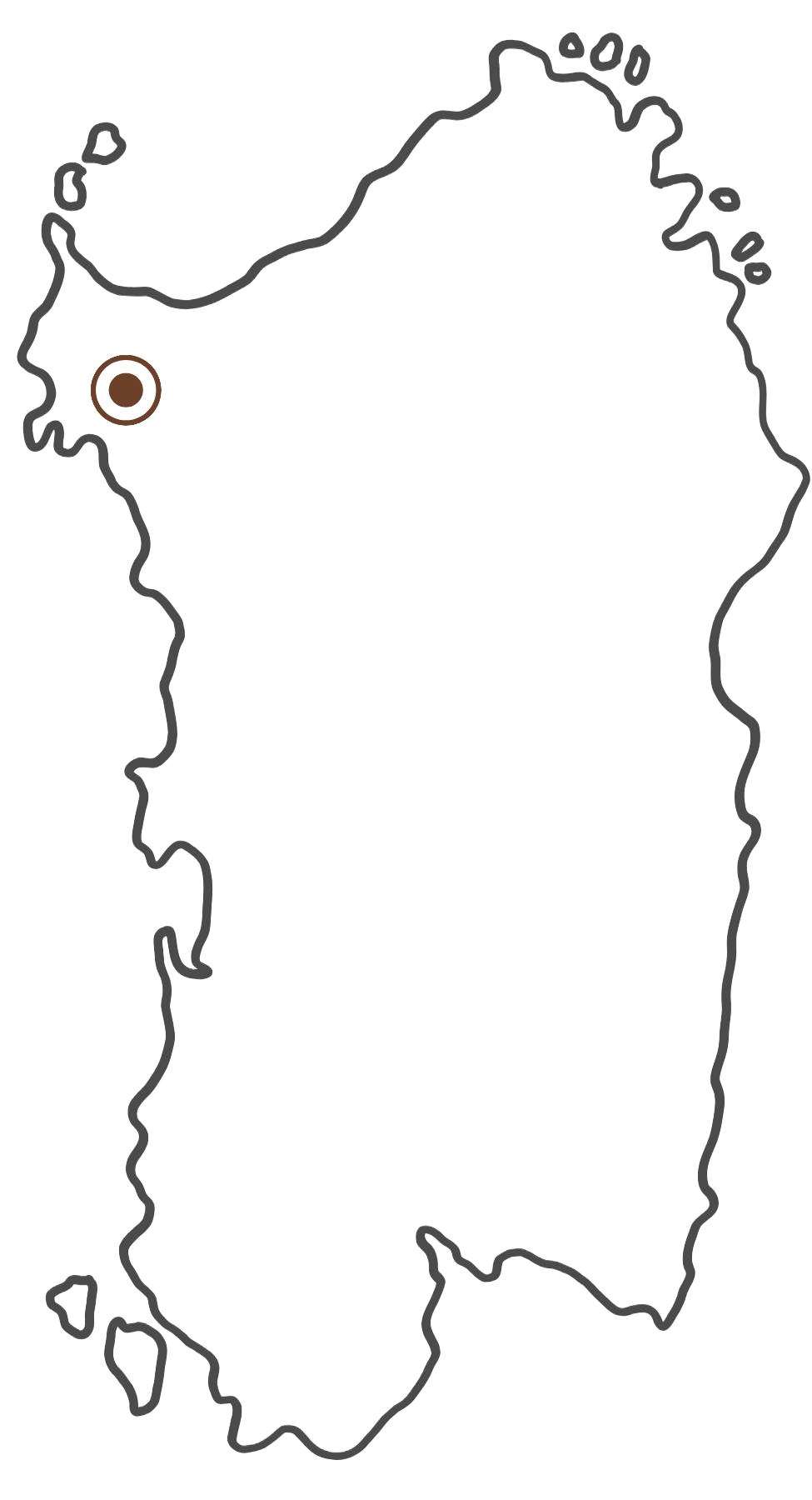


In 1903, the pickaxes of farmers busy clearing the land brought to light the first carved stones. That fortuitous discovery revealed the Anghelu Ruju necropolis, the largest concentration of domus de janas in northern Sardinia. Thirty-seven subterranean rock-cut tombs, sculpted into the sandstone bench between 3200 and 1800 BC, document their uninterrupted use for over a millennium.
What makes the visit unique is not only the sequence of rooms accessed by descending vertical shafts or walking along open-air corridors, but the decorative obsession of those who sculpted them. Across the walls, over thirty bovine symbols are carved into the stone. The bull, emblem of fertilizing strength, dominates the entrances and main cells, often framed by traces of red ochre, the color of blood and rebirth.
Entering these tombs means exploring a faithful inverted reproduction of Neolithic dwellings. The builders did not limit themselves to excavating the rock. They sculpted the beams of the gable roofs, central pillars, hearths, steps, and even false doors leading to the afterlife directly into the living stone, transforming the darkness of the earth into an eternal dwelling for their deceased.
Completing the picture are the artifacts recovered inside, witnesses to a community rich and integrated into the trade routes of the ancient Mediterranean. Excavations have yielded finely crafted ceramics such as tripod vessels and flask-shaped vases, necklace beads, female stone idols dedicated to the Mother Goddess and, over the passing centuries, copper daggers, axes, and bronze objects.